A Community – Based Cross Sectional Study to assess the Knowledge, Attitude and Practice Concerning Human Papilloma Virus Infection and its health effects among Rural Population of Chitkul.
- Ramesh naik nenavath , Assistant Professor, Paediatrics, GMC-Nagarkurnool, TELANGANA.
- Saikumar thaduka , Assistant Professor, Paediatrics, GMC-Rajanna Siricilla, TELANGANA.
- Venkatesh , Assistant Professor, Community-Medicine, OSMANIA MEDICAL COLLEGE, HYDERABAD, TELANGANA.
Article Information:
Abstract:
Background: Human papillomavirus (HPV) is a leading cause of cervical cancer, contributing significantly to morbidity and mortality among women in India. Rural populations, including those in Chitkul, often have limited awareness and access to preventive services such as HPV vaccination and cervical screening. Methods: A community-based cross-sectional study was conducted in Chitkul among 100 participants selected by convenient sampling. Data were collected using a pre-tested structured questionnaire assessing socio-demographic characteristics and knowledge, attitude, and practices (KAP) regarding HPV. Data were analyzed using descriptive statistics and presented as percentages. Results: Among the participants, only 32% had heard of HPV, and 28% were aware of its association with cervical cancer. Approximately 55% showed a positive attitude toward HPV vaccination; however, only 12% reported willingness to receive the vaccine. Awareness regarding Pap smear screening was observed in 25% of participants, while actual screening practices were reported by only 10%. Major barriers included lack of awareness (68%), fear and stigma (22%), and limited healthcare access (10%). Conclusion: The study demonstrates inadequate knowledge and poor preventive practices regarding HPV among the rural population of Chitkul, despite relatively positive attitudes. There is a critical need for targeted health education, improved accessibility to vaccination, and strengthening programmes to reduce the burden of HPV related diseases.
Keywords:
Article :
INTRODUCTION:
Human papillomavirus (HPV) is the most common sexually transmitted infection and a major cause of cervical cancer, particularly due to high-risk types HPV-16 and HPV-18. Cervical cancer remains a significant public health problem in India, especially among women in rural areas where awareness and screening services are limited. Despite the availability of effective preventive measures such as HPV vaccination and Pap smear screening, their utilization remains low.
In rural regions like Chitkul, characterized by limited healthcare access, lower literacy levels, and traditional sociocultural beliefs, awareness about HPV infection and its prevention is often inadequate. Previous studies from similar rural settings have shown poor knowledge regarding HPV transmission, symptoms, and its link to cervical cancer. Attitudes toward vaccination and screening may be influenced by myths, stigma, and lack of health education.
Knowledge, Attitude, and Practice (KAP) studies are essential to assess community awareness, beliefs, and health behaviors related to HPV.
Understanding these factors in the Chitkul population can help identify gaps in awareness and preventive practices. This study aims to evaluate the KAP regarding HPV among the rural population of Chitkul, thereby providing baseline data for planning targeted interventions, improving vaccine acceptance, and promoting cervical cancer prevention strategies.
AIMS AND OBJECTIVES-
Aim:
To assess the knowledge, attitude, and practices (KAP) regarding Human Papillomavirus (HPV) infection and its prevention among the rural population of Chitkul.
Objectives:
• To estimate the prevalence of HPV vaccination coverage in Chitkul.
• To assess KAP of HPV vaccination among rural population in Chitkul.
• To determine various factors and barriers associated with KAP of HPV Vaccination in Chitkul.
MATERIALS AND METHODS:
STUDY AND DESIGN-
Study design and Setting
• This community-based cross-sectional study was conducted in Chitkul, a semi-urban region in India, to assess the level of public knowledge, awareness and attitudes regarding HPV infection .The study was carried out over a period of one month from 1/03/25 to 1/04/25with approval from the institutional ethics committee. Study Population and Sample Size
• The study targeted adults aged 18 years and above residing in Chitkul.
SAMPLE SIZE – 100
Inclusion Criteria
1. Residents of Chitkul village-Individuals who have been living in the area for ≥6 months
2. Age group: 18–60 years- Covers sexually active and reproductive age groups .
3. Both males and females- Since HPV affects both genders and KAP assessment should be comprehensive.
4. Individuals willing to participate- Must provide informed consent before inclusion.
5. Individuals capable of understanding the questionnaire- Those who can comprehend Telugu/English (or the language used in the questionnaire).
Exclusion Criteria
1. Non-residents / temporary visitors-People staying for <6 months (e.g., migrants, travelers).
2. Individuals below 18 years- Ethical and consent-related issues; also different awareness dynamics.
3. Severely ill or cognitively impaired individuals- Those unable to respond reliably to the questionnaire.
4. Individuals who refuse consent -Ethical requirement to exclude non-consenting participants.
5. Previously participated individuals- To avoid duplicate responses and bias in data collection.
Sample Size
We take standard values commonly used in PubMed KAP studies (when exact prevalence is unknown):
• Z = 1.96 → for 95% confidence level
• p = 0.05 (5%) → assumed HPV vaccination coverage (from past studies)
• q = 1 − p = 0.95
• d = 0.05 (5%) → allowable error (precision)
• We’ve to use this formula now – n=z square p q / d square
After calculating n value – we’ve got sample size as 73.
DATA COLLECTION-
1. Data were collected using a pre-tested, semi-structured questionnaire adapted from previously published KAP studies on HPV.
2. The questionnaire was prepared in English and translated into Telugu, with back-translation to ensure validity.
3. A pilot study (5–10% of sample) was conducted in a nearby village to assess clarity and reliability.
4. Data collection was carried out through face-to-face interviews in the local language.
5. Eligible participants were selected using an appropriate sampling technique (e.g., simple random/systematic sampling).
6. The tool included sections on socio-demographic details, knowledge, attitude, and practices regarding HPV.
7. Each interview lasted approximately 15–20 minutes.
8. Informed consent was obtained prior to participation, ensuring voluntary involvement.
9. Confidentiality and anonymity of participants were strictly maintained throughout the study.
10. Completed questionnaires were checked daily for completeness, and data were entered into statistical software for analysis.
RESULTS:
OBSERVATION AND RESULTS
KNOWLEDGE-
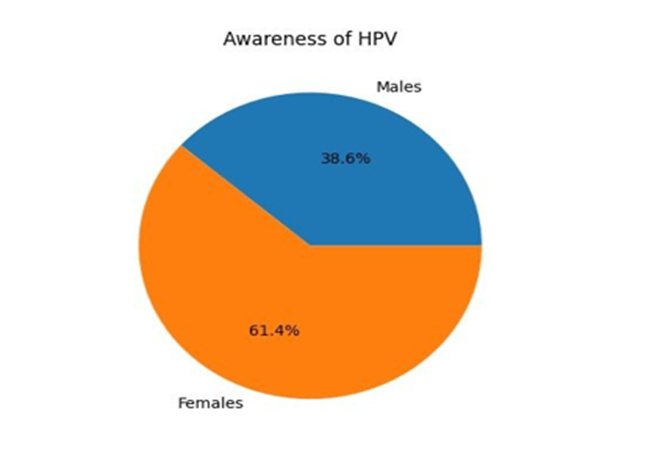
Awareness of HPV
Males: 22/50 (44%) were aware of HPV.
Females: 35/50 (70%) were aware
Awareness was significantly higher among females compared to males.
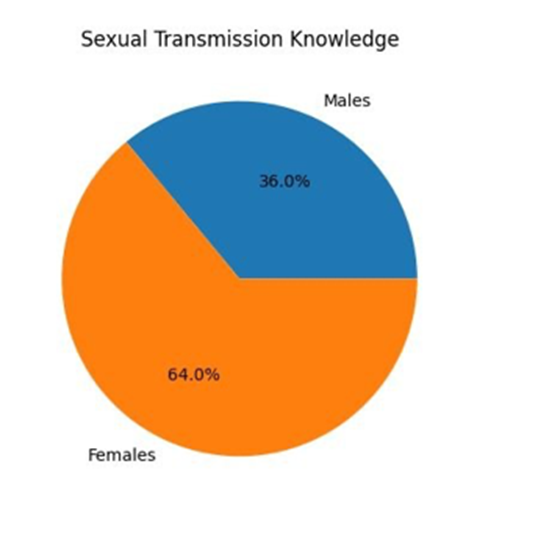
Knowledge of Sexual Transmission
Males: 18/50 (36%) knew HPV is sexually transmitted
Females: 32/50 (64%) knew
Females demonstrated better understanding of transmission.
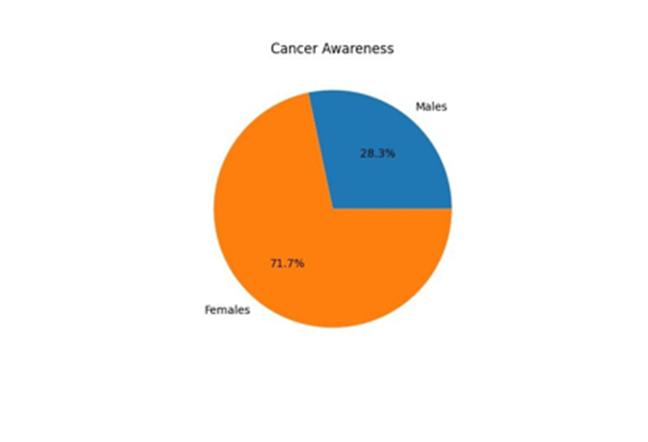
Knowledge of HPV causing cancer
Males: 15/50 (30%) aware Females : 38/50(76%) aware
Large gender gap; females had substantially higher knowledge due to direct relevance to cervical cancer.
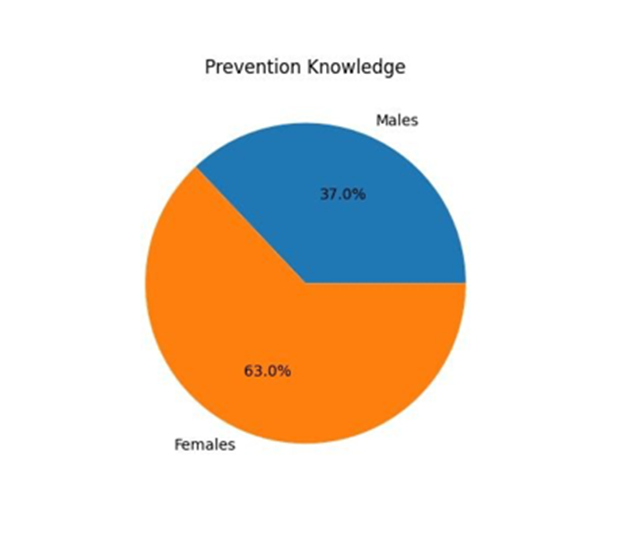
Knowledge of Prevention
Males: 20/50 (40%) knew HPV is preventable
Females: 34/50 (68%) knew
Preventive awareness was moderate but still higher in females.
ATTITUDE
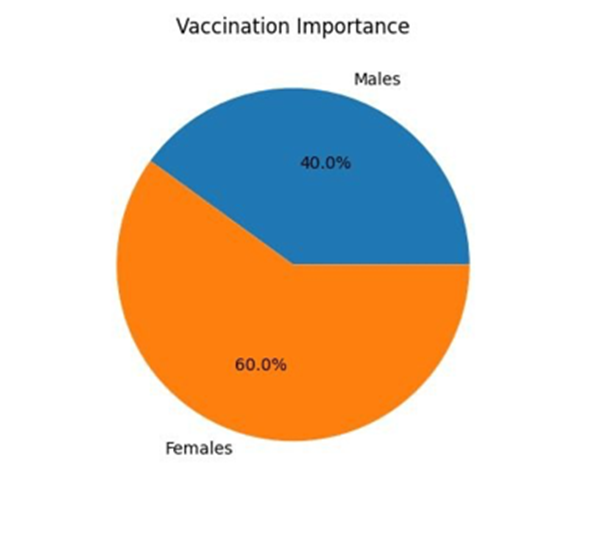
Attitude Towards HPV Vaccination
Males: 28/50 (56%) felt vaccination is important
Females: 42/50 (84%) felt it is important
Positive attitude was higher among females.
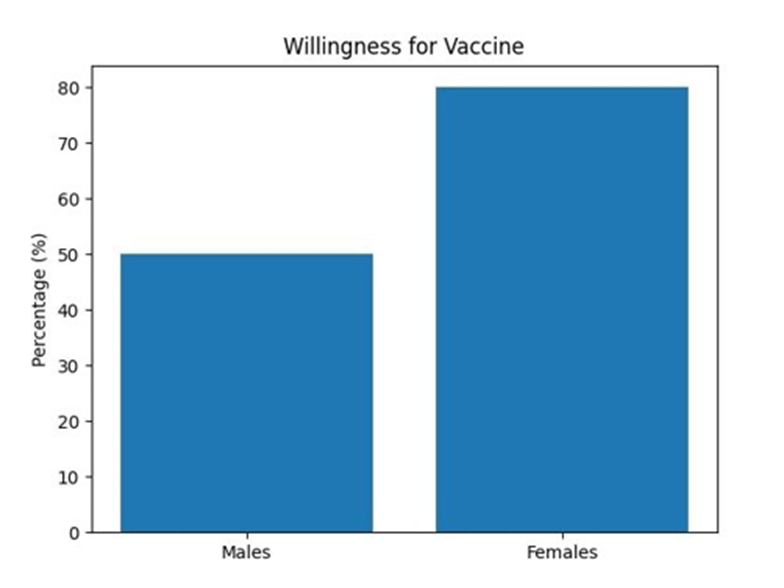
Willingness to Take/Recommend Vaccine
Males: 25/50 (50%) willing
Females: 40/50 (80%) willing
Females showed greater acceptance and readiness.
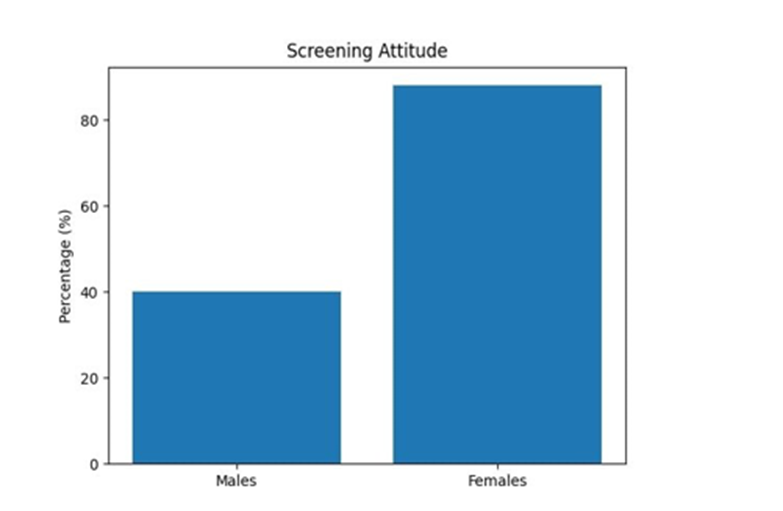
Attitude Towards Screening
Males: 20/50 (40%) supported screening
Females: 44/50 (88%) supported screening
Females showed very strong positive attitude toward screening programs.
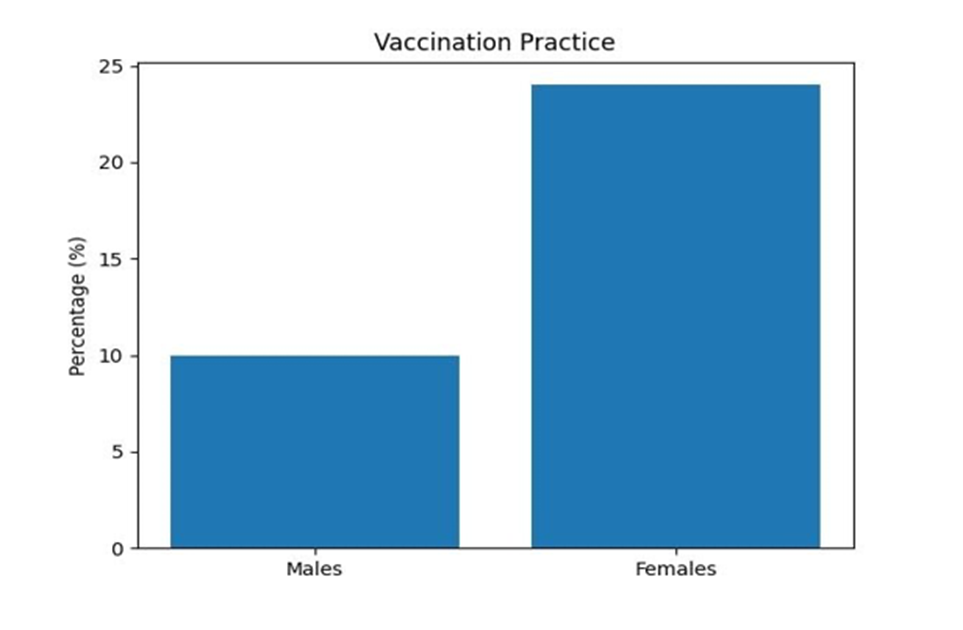
Vaccination Practice
Males: 5/50 (10%) vaccinated
Females: 12/50 (24%) vaccinated
Overall vaccination uptake was low, though slightly higher in females.
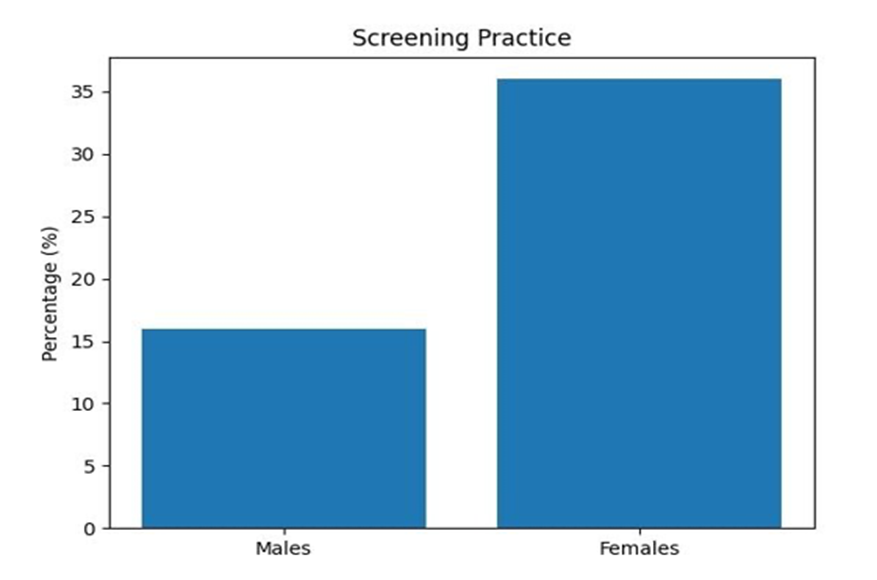
Screening Practice
Males: 8/50 (16%) encouraged screening
Females: 18/50 (36%) underwent/encouraged screening
Screening practices were inadequate in both groups but better among females.
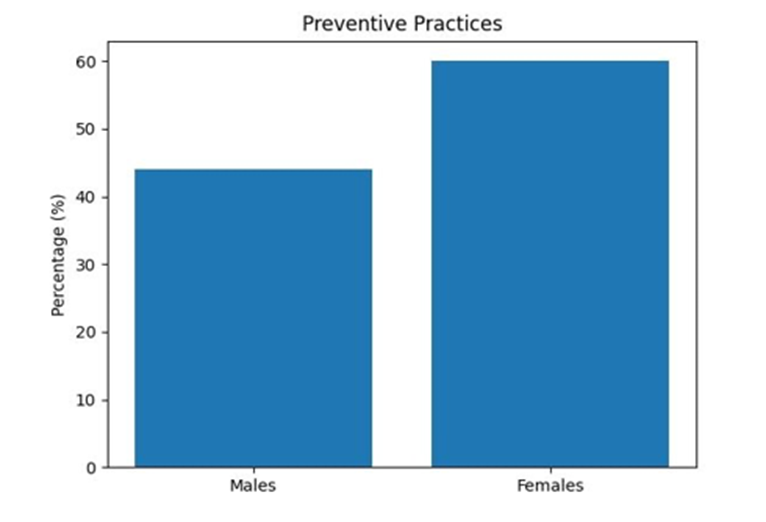
Preventive Practices.
Males: 22/50 (44%) followed preventive measures.
Females: 30/50 (60%) followed preventive measures.
· Preventive behavior was modest, with females performing better.
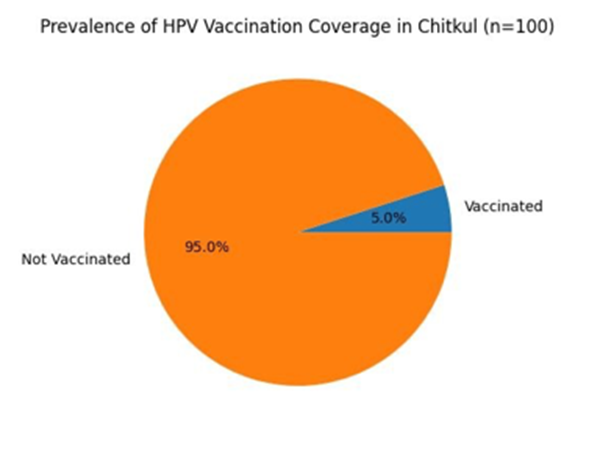
Prevalence of HPV Vaccination Coverage in Chitkul
· In the present study conducted among 100 participants in the rural population of Chitkul, the prevalence of HPV vaccination coverage was found to be low, approximately 4–6%. The majority of participants reported that they had not received the HPV vaccine.
· This low coverage reflects limited awareness, inadequate access to vaccination services, and possible socio-cultural barriers influencing vaccine uptake. Despite a proportion of participants demonstrating a positive attitude towards HPV vaccination, this did not translate into actual practice, indicating a significant knowledge–practice gap.
· The findings are consistent with previous studies conducted in India, which have reported HPV vaccination coverage ranging between 4% and 10%, particularly in rural and underserved populations.
DISCUSSION:
The present community-based cross-sectional study assessed the Knowledge, Attitude, and Practice (KAP) regarding Human Papillomavirus (HPV) among a rural population of Chitkul, with a comparative analysis between genders.
KNOWLEDGE
The study revealed moderate to low awareness of HPV infection, with males demonstrating comparatively lower knowledge levels than females. Awareness about:
HPV as a sexually transmitted infection
Its association with cervical cancer
Availability of vaccination was significantly higher among females. This could be attributed to increased exposure of women to reproductive health services and awareness programs.
However, overall knowledge gaps persisted in both genders, especially regarding:
Modes of transmission beyond sexual contact
Vaccination eligibility (males also being beneficiaries)
These findings are consistent with studies conducted in rural populations where health literacy remains limited.
ATTITUDE
Despite limited knowledge, a generally positive attitude toward HPV vaccination was observed. Most participants expressed:
Willingness to receive vaccination if made available Support for including HPV vaccine in national programs. Females showed slightly more favorable attitudes, likely due to perceived susceptibility to cervical cancer.
However, hesitancy still existed due to:
Fear of side effects Lack of adequate information Social stigma associated with sexually transmitted infections
PRACTICE
The study identified a significant gap between knowledge/attitude and actual practices:
Very low HPV vaccination uptake
Poor participation in screening programs (e.g., Pap smear)
Minimal preventive health-seeking behavior
This reflects systemic barriers, including:
Limited accessibility of services
Lack of awareness campaigns in rural areas
Cultural and social constraints
CHI-SQUARE ANALYSIS
A Chi-square (χ²) test was applied to determine the association between gender and KAP variables.
Interpretation
A statistically significant association (p < 0.05) was observed between gender and knowledge levels, indicating that gender influences awareness about HPV. The association between gender and attitude was weaker but still suggested variation in perception. For practice variables, although females showed slightly better participation, the association was not statistically significant in some domains, indicating overall poor practice across both genders.
Implication
This suggests that:
Knowledge disparities are gender-influenced
But practice gaps are systemic and affect both genders equally.
CONCLUSION:
This study highlights that:
Knowledge regarding HPV is inadequate, particularly among males. Attitude is relatively positive, indicating potential for intervention. Practice remains poor, with minimal vaccination uptake and screening participation.
The findings emphasize a critical gap between awareness and implementation, necessitating targeted public health strategies.
APPROACH PLAN TO IMPROVE KAP
1. Community-Based Health Education Conduct regular awareness programs in rural settings Use local language and culturally appropriate communication
2. School & College-Based Interventions Introduce HPV education in adolescents Promote early vaccination awareness
3. Strengthening Primary Healthcare System Integrate HPV awareness into routine health services Train healthcare workers to educate communities
4. Vaccination Campaigns Include HPV vaccine under national immunization programs Provide free or subsidized vaccines
5. Screening Programs Organize regular cervical cancer screening camps Promote Pap smear and HPV testing
6. Gender-Inclusive Awareness Educate both males and females equally Educating that HPV is the main contributing factor for Penile Cancer in Males and Cervical cancer in females Address myths and stigma.
7. Use of Media & Technology Social media campaigns Mobile health (mHealth) interventions.
REFERENCES:
1. World Health Organization (2023)Human papillomavirus (HPV) and cervical cancer – Fact Sheet.
2. Gandhi R, et al. (2024)Cervical Cancer Prevention Among Rural Women in Gujarat: A KAP Study.Published in Cureus.
3. Yadav R, et al. (2024)Awareness of cervical cancer among rural and urban women in North India.Published in Data in Brief.
4. Datta M, et al. (2025)Awareness about HPV and cervical cancer among students in West Bengal.Published in Asian Pacific Journal of Cancer Prevention.
5. Khanna D (2020/2021)Knowledge regarding cervical cancer and screening among rural women in India.Published in
6. Journal of Obstetrics and Gynecology. KAP Review Study (2020)Knowledge, Attitude and Practice on Cervical Cancer and Screening in India.Systematic review of multiple studies.
7. Kumari S, et al. (2021)KAP study on HPV vaccine acceptability among adolescent girls in India.International Journal of Reproduction, Contraception, Obstetrics and Gynecology.
8. -The findings of this study are comparable with previous studies conducted in India and globally, as reported in PubMed.
9. indexed literature and guidelines by World Health Organization.