A Cross-Sectional Study on Knowledge, Attitude and Practice regarding the National Immunisation Schedule among Caregivers in Peri-Urban Hyderabad, Telangana.
- .Saikumar thaduka , Assistant Professor, Paediatrics, GMC-Rajanna Siricilla, TELANGANA.
- Venkatesh2 , Assistant Professor, Community-Medicine, OSMANIA MEDICAL COLLEGE, HYDERABAD, TELANGANA.
- Suresh mekala , Assistant Professor, Paediatrics, GMC-Rajanna Siricilla, TELANGANA,
Article Information:
Abstract:
Background: Immunization remains one of the most important preventive strategies in child healthcare, especially in developing countries like India. Although the National Immunisation Schedule is well-established, real-world implementation in peri-urban settings is often incomplete due to caregiver-level and system-level gaps. This study was undertaken to understand the existing Knowledge, Attitude, and Practice (KAP) regarding immunization among caregivers in peri-urban Hyderabad. Objectives: To assess KAP levels regarding the National Immunisation Schedule in the study population, to compare findings across different demographic groups, and to identify the key barriers that prevent complete immunization. Methods: A descriptive cross-sectional study was conducted over approximately 3 months in peri-urban areas of Hyderabad, Telangana. A total of 193 participants were enrolled based on calculated sample size (Z²×P×(1–P)/d²; P=0.45, d=0.07). A pre-tested semi-structured questionnaire was used for data collection. Results: Adequate knowledge was found in 68.5% of caregivers, positive attitude in 86.4%, and adequate practice in 71.6%. A gap of approximately 14.8 percentage points was observed between attitude and practice scores. Barriers included poor awareness of booster dose schedules, MCP card-related issues, and logistical difficulties at outreach centres. Conclusion: Despite relatively favourable attitudes toward immunization, a meaningful gap in practice was noted, suggesting that systemic and logistical factors play a larger role than individual belief in determining immunization outcomes in this setting.Childhood Immunization, Knowledge, Attitude and Practice (KAP), Universal Immunisation Programme (UIP), Vaccine Coverage, Immunization Compliance.
Keywords:
Article :
INTRODUCTION:
Immunization is universally recognized as one of the most effective public health interventions for reducing childhood morbidity and mortality. In India, the Universal Immunisation Programme (UIP) has been in operation since 1985, and the National Immunisation Schedule (NIS) currently covers vaccines against 12 vaccine-preventable diseases from birth up to 5 years of age. The NIS is regularly updated by the Ministry of Health and Family Welfare (MoHFW) and is implemented through a network of government health facilities, Urban Primary Health Centres (UPHCs),Rural health centres(RHCs),Sub Centers and community outreach programmes.
Despite the existence of this framework, national immunization coverage remains below the desired 90% threshold in several states. As per NFHS-5 (2019–21), Telangana reported full immunization coverage of approximately 73%, meaning nearly one in four children did not receive all recommended vaccines on schedule. The peri-urban areas around Hyderabad, characterized by dense migrant settlements, limited healthcare infrastructure, and high residential mobility, are among the more vulnerable zones within this gap.
Rationale for the Study
The idea for this study came up during a community posting during the internship, when I noticed that many mothers visiting the RHC outreach camp were either unsure of their child’s next due vaccine or had lost their MCP cards after shifting homes. Some had simply not returned after missing one session. It became clear to me that the issue was not a lack of awareness about vaccination in general, but more specific gaps — around which vaccine, when, and where. This prompted me to formally assess KAP in this group.
A KAP study is a well-established research approach to identify the gap between what people know, what they believe, and what they actually do. In the context of immunization, such studies are particularly useful because they can distinguish between demand-side barriers (knowledge, attitude) and supply-side barriers (logistics, availability), both of which require different types of interventions.
Aims and Objectives
Primary Objective: To assess the levels of knowledge, attitude and practice regarding the National Immunisation Schedule among caregivers of children aged 0–5 years in peri-urban areas of Hyderabad, Telangana.
Secondary Objectives:
1. To compare KAP scores across demographic sub-groups including gender, educational status, parity and duration of residence in the area.
2. To identify the main barriers preventing complete and timely immunization in the study population.
3. To suggest practical recommendations that could be considered by district health authorities and ASHA supervisors.
MATERIALS AND METHODS:
Study Design: Descriptive, Cross-sectional study.
Study Setting: Peri-urban localities on the outskirts of Hyderabad, Telangana, covered under the urban outreach immunization programme of the nearest RHC.
Study Population: Primary caregivers — mothers, fathers, and guardians — of children in the 0–5 year age group currently residing in the study area.
Study Duration: Approximately 3 months (data collection phase).
Inclusion Criteria: Caregivers of children aged 0–5 years who were present at the study site during data collection.
Exclusion Criteria: Caregivers who had no child in the 0–5 year age bracket, those who declined to participate, and those who had been residing in the area for less than one month.
Sample Size Calculation
Since no prior local study was available with a reliable estimate of knowledge prevalence specific to peri-urban Hyderabad, P was taken as 0.45 as a conservative estimate, which gives a larger and safer sample size. The standard formula for a single proportion was used:
n = Z² × P × (1–P) / d²
Where Z = 1.96 (95% confidence level), P = 0.45 (expected prevalence of adequate knowledge), and d = 0.07 (allowable margin of error, slightly relaxed given the exploratory nature of the study and resource constraints). This gave n = (3.8416 × 0.45 × 0.55) / 0.0049 = 193.8 ≈ 193 participants. All 193 questionnaires were completed and included in the final analysis.
Data Collection
Data was collected using a pre-tested, semi-structured questionnaire.It was divided into four sections: Section A (socio-demographic details), Section B (knowledge — 10 items), Section C (attitude — 10 Likert-scale statements), and Section D (practice — 10 items).
During data collection I personally observed that several caregivers, particularly those who had recently migrated, were not registered in the local ASHA worker’s area and had therefore never been called for immunization sessions. This is a ground-level issue that does not easily show up in routine health data.
Scoring and Classification
Knowledge scores of ≥60% were classified as ‘adequate’. Attitude scores were based on a 5-point Likert scale and scores ≥60% of maximum were classified as ‘positive’. Practice scores ≥60% were classified as ‘adequate practice’.
RESULTS:
Socio-demographic Profile
Of the 193 caregivers enrolled, 151 (78.2%) were biological mothers, 28 (14.5%) were fathers, and 14 (7.3%) were other guardians such as grandmothers.Around 61% had completed secondary schooling, 18.5% had primary education only, and 12.3% had no formal education. Only 8.2% were graduates or postgraduates. A notable 42% of participants had been residing in the study area for fewer than three years, reflecting the high migrant character of these localities.
Overall KAP Summary
Table 1. Overall KAP Summary regarding Immunization Schedule (n = 193)
|
Domain |
Adequate / Positive (%) |
Gap to 100% (pp) |
Priority |
|
Knowledge |
68.5% |
−31.5 |
Moderate |
|
Attitude |
86.4% |
−13.6 |
Favourable |
|
Practice |
71.6% |
−28.4 |
Notable ⚠ |
pp = percentage points. Attitude–Practice gap: 14.8 percentage points.
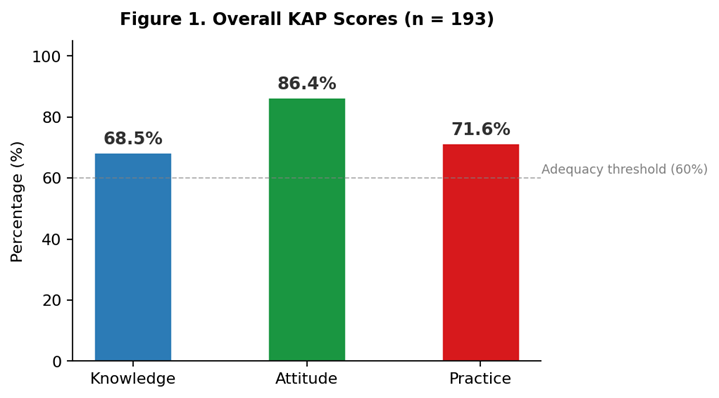
Figure 1. Overall KAP Scores — Adequate knowledge (68.5%), positive attitude (86.4%), and consistent safe practice (71.6%) among caregivers (n = 193).
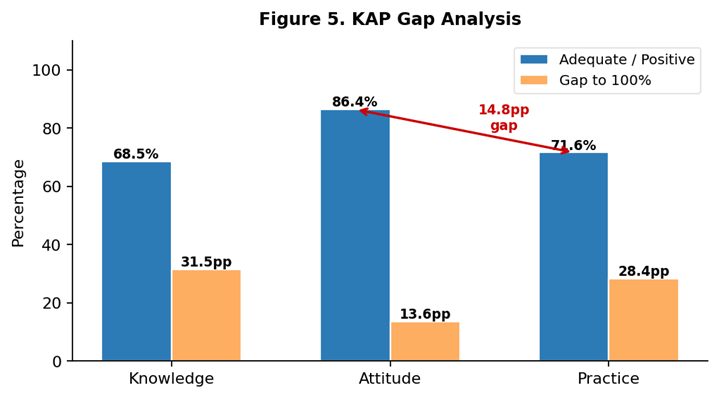
Figure 5. KAP Gap Analysis — Adequate/Positive scores versus gap to 100%, with the 14.8pp Attitude–Practice gap highlighted.
Practice Compliance
Adequate practice was reported by 71.6% of caregivers overall. When broken down by individual vaccine, compliance was highest for BCG at birth and Hepatitis B first dose.Compliance dropped noticeably for later vaccines like DPT booster at 16–24 months, and MR second dose. This declining trend with successive doses is consistent with patterns reported in NFHS-5 data and likely reflects reduced institutional support beyond the early newborn period.
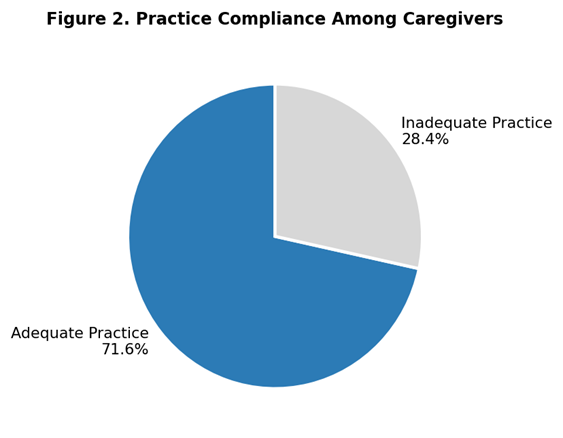
Figure 2. Practice Compliance Among Caregivers (n = 193).
Knowledge by Education Level
Knowledge scores showed a statistically significant association with educational attainment. Caregivers with no formal education had adequate knowledge in only 48.3% of cases, compared to 89.2% among graduates. Even among caregivers with secondary education — the largest group in the sample — adequate knowledge was present in only 77.4%, indicating that school-level education alone is not sufficient to ensure immunization literacy.
Table 2. Knowledge Levels by Caregiver Education
|
Education Level |
Adequate Knowledge (%) |
Classification |
|
Graduate / Postgraduate |
89.2% |
High |
|
Secondary School (Class 9–12) |
77.4% |
High |
|
Primary School (Class 1–8) |
61.7% |
Moderate |
|
No Formal Education |
48.3% |
Low |
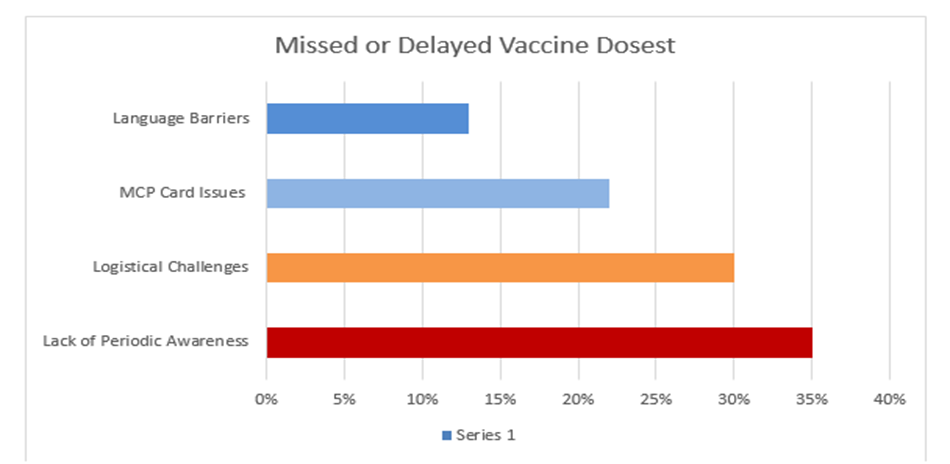
Figure 3. Knowledge Levels by Caregiver Education — statistically significant variation across education groups.
PRIMARY BARRIERS
When caregivers who reported incomplete or delayed immunization were asked the reason, the responses pointed to a mix of awareness-related and logistical factors. Notably, supply-side failures accounted for a substantial proportion, suggesting that even willing caregivers face structural obstacles.
Table 3. Primary Barriers to Effective Immunization Practice
|
Barrier |
Description |
|
Lack of Periodic Awareness |
Many caregivers, particularly recent migrants, had not attended any immunization awareness session. Knowledge of booster dose schedules and MCP card importance was especially poor in this subgroup. |
|
MCP Card Issues |
Loss of the Mother and Child Protection card during relocation was commonly reported. Without this card, caregivers were often unsure of what had been given and what remained, and some were turned away by health workers. |
|
Logistical Challenges |
Centre closures on due dates and temporary vaccine stock-outs were reported by a significant number of caregivers. In several instances no alternative date was communicated, and caregivers did not return. |
|
Language Barriers |
Caregivers from non-Telugu speaking backgrounds reported difficulty understanding ASHA worker instructions. This was particularly noted in families from Odisha and Chhattisgarh and bihar. |
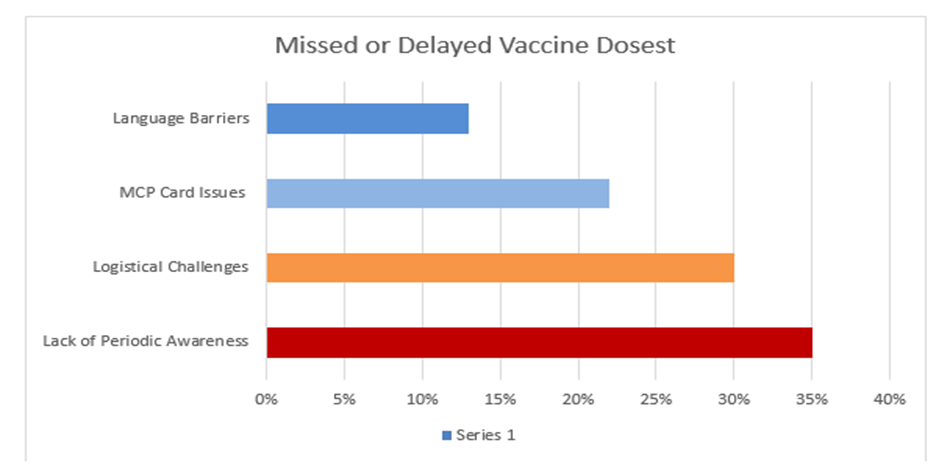
Figure 4. Self-Reported Reasons for Missed or Delayed Vaccine Doses
DISCUSSION:
The overall KAP findings from this study are broadly in line with what has been reported in similar studies from other peri-urban and semi-urban settings in India, though there are some differences worth noting. The knowledge adequacy rate of 68.5% in our study is somewhat higher than what Manjunath et al. (2003) reported in a rural setting (around 55%), but lower than rates seen in urban hospital-based studies where caregivers tend to have higher educational attainment and more regular health system contact.
The attitude score of 86.4% is encouraging and suggests that the majority of caregivers in peri-urban Hyderabad are not opposed to vaccination. This is consistent with findings from other studies in Telangana and AndhraPradesh, where vaccine hesitancy in the classical sense is relatively uncommon. However, the gap between attitude and practice — 14.8 percentage points in our study — indicates that positive attitude alone is not sufficient to drive complete immunization behaviour.
The decline in compliance across the immunization schedule is an important finding. BCG compliance at birth was higher which reflects the fact that institutional delivery rates in the study area are reasonably good. However, compliance dropped significantly for the 16–24 month booster doses. This pattern — good early coverage followed by drop-off at boosters — is well documented in Indian literature and is largely attributed to the shift from facility-based to community-based immunization as the child ages.
CONCLUSION:
This study found that while knowledge (68.5%) and attitude (86.4%) scores were reasonably satisfactory among caregivers in peri-urban Hyderabad, actual immunization practice (71.6%) lagged behind, particularly for booster doses. The 14.8-percentage-point attitude-practice gap is not primarily a function of belief or hesitancy but reflects structural barriers including poor awareness of booster schedules, MCP card-related problems, and logistical failures at outreach centres.
From a programme perspective, the findings suggest the need for more frequent and language-appropriate awareness outreach targeting migrant communities, and operational improvements at peri-urban immunization centres around vaccine availability and MCP card replacement protocols.
As a student undertaking this project, one of the clearest takeaways for me was how much of the immunization gap is invisible in routine data. The caregiver who wants to vaccinate but encounters a closed centre, or who cannot explain her child’s history because she lost the MCP card during a move, does not show up as ‘hesitant’ — but she still contributes to incomplete coverage.
Limitations
This was a cross-sectional study, so causal conclusions cannot be drawn. Practice data relied on self-reporting, which may be subject to recall bias or social desirability bias. The study was confined to few localities and the findings may not be representative of the wider peri-urban population.
REFERENCES:
1. Ministry of Health and Family Welfare, Government of India. National Immunisation Schedule. Immunization Division, MoHFW. New Delhi; 2022.
2. International Institute for Population Sciences (IIPS) and ICF. National Family Health Survey (NFHS-5), 2019–21: India. Mumbai: IIPS; 2022.
3. Manjunath U, Pareek RP. Maternal knowledge and perceptions about routine childhood vaccinations in a rural area in Rajasthan. Indian J Med Sci. 2003;57(4):158–163.
4. Datta P, Mohi GK, Chander J. Immunisation management in India: Critical appraisal. J Lab Physicians. 2018;10(1):6–14.
5. Government of Telangana. Health, Medical & Family Welfare Department Annual Report 2024–25. Hyderabad: GoT; 2025.
6. Kusuma YS, Kumari R, Pandav CS, Gupta SK. Migration and immunization: Determinants of childhood immunization uptake among socioeconomically disadvantaged migrants in Delhi. Trop Med Int Health. 2010;15(11):1326–1332.