Prevalence And Clinical Profile Of Acute Respiratory Infections Among Hospitalized Under-Five Children At A Tertiary Care Hospital In Southern Odisha: A Retrospective Cross-Sectional Study
- Sujit Kumar Sahoo , Assistant Professor, Department of Paediatrics. Shri Jagannath Medical College & Hospital, Puri, Odisha
- Swayangprava Pradhan , Associate Professor, Department Of Paediatrics, Govt. Medical College And Hospital, Phulbani, Kandhamal, Odisha,
- Sunayani Behera , Assistant Professor, Department of Paediatrics. PGIMER And Capital Hospital, BBSR, Odisha
Article Information:
Abstract:
Acute respiratory infections (ARIs) remain a major cause of morbidity and hospitalization among children under five years of age, particularly in low- and middle-income countries. Despite continued public health interventions, the burden of ARIs remains high in India, especially in underserved and tribal regions such as Odisha. Objectives: To assess the prevalence, clinical profile, and nutritional status of acute respiratory infections among hospitalized children under five years of age at a tertiary care hospital in southern Odisha. Methods: A hospital-based descriptive cross-sectional study was conducted in the Department of Pediatrics at SLN Medical College and Hospital, Koraput, Odisha, using retrospective medical records of children admitted between January 2024 and December 2025. Children aged 2 months to 5 years admitted through the outpatient department, emergency department, or referred from the Pediatric Intensive Care Unit were included. Data on socio-demographic characteristics, presenting symptoms, nutritional profile, and anemia status were extracted and analyzed using SPSS version 20. Descriptive statistics were expressed as frequencies and percentages. Results: Among 985 under-five hospital admissions, 361 (36.65%) children were diagnosed with acute respiratory infections. Nearly two-thirds of admissions occurred through the emergency department. Fever (81%) and cough (76%) were the most common presenting complaints, followed by running nose (26%) and difficulty breathing (24%). Infants constituted the largest proportion of admissions (47%), and males predominated (71%). The median hospital stay was 4 days, with 83% of children hospitalized for 2–7 days. Nutritional assessment revealed stunting in 15%, wasting in 10.8%, and overweight in 2.5% of children. Anemia was present in 54.6% of cases, predominantly mild to moderate in severity. Conclusion: Acute respiratory infections remain one of the leading causes of hospitalization among under-five children at SLN Medical College and Hospital, Koraput. Fever and cough were the predominant presenting symptoms, while undernutrition and anemia were common coexisting conditions. Strengthening early detection, nutritional interventions, and timely management strategies may reduce the burden of ARIs among vulnerable pediatric populations.
Keywords:
Article :
INTRODUCTION:
Children below five years of age are particularly susceptible to a wide range of infectious illnesses because of their developing immune system and increased exposure to environmental risk factors.1–3 Among these illnesses, acute respiratory infections (ARIs), encompassing both upper respiratory tract infections (URTIs) and lower respiratory tract infections (LRTIs), remain one of the leading causes of pediatric morbidity and healthcare utilization. ARIs account for a substantial proportion of outpatient consultations and hospital admissions in this age group.4 Upper respiratory tract infections such as the common cold, pharyngitis, tonsillitis, and otitis media are frequently encountered among young children, whereas lower respiratory infections, especially pneumonia, contribute significantly to severe disease outcomes.
Globally, pneumonia continues to be a major contributor to illness and mortality among children under five years of age, although its prevalence and disease burden differ across geographic regions.5–7 Respiratory tract infections, particularly pneumonia, are responsible for a considerable proportion of childhood deaths, especially in low- and middle-income countries where access to timely diagnosis and treatment may be limited. Estimates indicate that nearly one-fifth of deaths among children younger than five years are attributable to respiratory infections, with neonatal pneumonia further increasing the overall burden.8 Countries in Southeast Asia and sub-Saharan Africa collectively contribute to the majority of ARI cases worldwide.8
In India, acute respiratory infections remain a major public health concern, contributing substantially to pediatric hospitalizations and mortality. It has been reported that pneumonia accounts for approximately 13%–16% of childhood deaths and results in more than four lakh deaths annually.7,8 Findings from the Million Death Study based on mortality statistics from the Registrar General of India documented nearly 369,000 deaths due to pneumonia among children aged 1–59 months, corresponding to a mortality rate of 13.5 per 1,000 live births, with a greater burden observed in central regions of the country.9 Despite ongoing public health interventions, the burden of ARIs among under-five children remains high, particularly in resource-constrained settings.
Considering the limited hospital-based evidence from tribal and underserved regions of eastern India, including Odisha, the present study was undertaken at SLN Medical College and Hospital, Koraput, to assess the prevalence and clinical profile of acute respiratory infections among hospitalized children below five years of age.
MATERIALS AND METHODS:
A hospital-based descriptive cross-sectional study was conducted in the Department of Pediatrics at SLN Medical College and Hospital, Koraput, Odisha. The study utilized retrospective data collected from the medical records of pediatric patients admitted between January 2024 and December 2025.
Children aged between 2 months and 5 years who were admitted to the pediatric ward through the outpatient department (OPD), emergency department, or referred from the Pediatric Intensive Care Unit (PICU) were included in the study. Records with incomplete or inadequate clinical information were excluded from the analysis.
A convenience sampling approach was adopted, and the medical records of all eligible admitted children during the study period were reviewed.
Data collection was performed using a semi-structured proforma designed to extract relevant information from patient records. The proforma included socio-demographic and anthropometric details such as age, sex, height, and weight, along with morbidity-related clinical information. Permission for access to medical records was obtained from the Head of the Department of Pediatrics and the Medical Record Section before data extraction.
For the purpose of this study, acute respiratory infections were identified based on presenting complaints, clinical findings, and relevant investigations, including chest radiography, and comprised both upper and lower respiratory tract infections. Nutritional status indicators such as stunting and wasting were assessed using height-for-age and weight-for-height Z-scores, respectively. Children with Z-scores below minus two standard deviations (−2 SD) were categorized as stunted or wasted and graded according to the World Health Organization (WHO) criteria.8 Overweight was defined as weight-for-height Z-score greater than +2 standard deviations above the median.1 Anemia was defined as hemoglobin concentration below 11 g/dL and further classified into mild, moderate, and severe categories according to standard guidelines.8
The collected data were entered into Microsoft Excel and analyzed using the Statistical Package for the Social Sciences (SPSS) version 20. Descriptive statistics were used to summarize the findings, and the results were presented as frequencies and percentages using tables and figures.
RESULTS:
During the study period, 985 patients below five years of age were admitted to the Department of Pediatrics. The study showed that the prevalence of ARI was 361 (36.65%) among hospitalized children under five years of age. Almost two-thirds of these children were admitted through the emergency department, while the remaining were admitted from the outpatient department (OPD).
The five most common clinical symptoms at presentation were fever, cough, running nose, difficulty breathing, and noisy breathing, respectively (Table 1). Most of the children with ARI were in the first year of life 170 (47%), followed by the second year 90 (25%) and third year 43 (12%) of life, respectively, with a median age of 15 months (IQR: 30–8 = 22).
The majority of children were male 256 (71%). The median duration of hospital stay was 4 days (IQR: 5–2 = 3), with most children 300 (83%) staying in the hospital for 2–7 days. Around 40 (11%) children were discharged on the following day of admission, while only 21 (6%) children stayed for more than 7 days.
Table 1: Main presenting symptoms at admission (multiple responses) (n = 361)
|
Presenting Complaints |
n (%) |
|
Fever |
292 (81) |
|
Cough |
274 (76) |
|
Running nose |
94 (26) |
|
Loose stool |
30 (8) |
|
Vomiting |
58 (16) |
|
Difficulty breathing |
87 (24) |
|
Noisy breathing |
47 (13) |
|
Decreased feeding |
11 (3) |
|
Fast breathing |
9 (2.5) |
Stunting and wasting were observed in 54 (15%) and 39 (10.8%) children, respectively, while 9 (2.5%) children were found to be overweight.
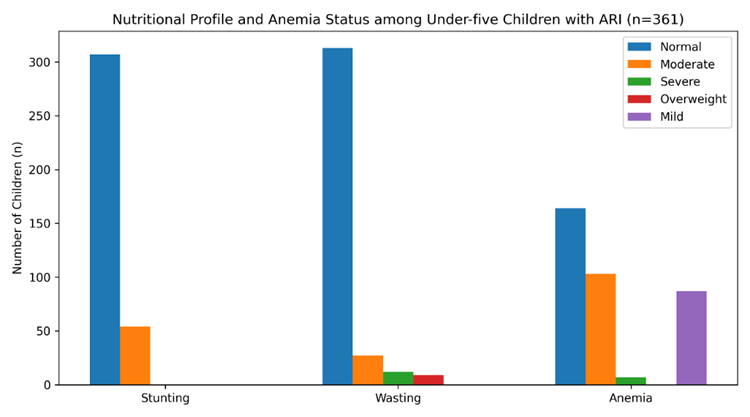
Figure 1. Nutritional profile and anemia status among under-five children admitted with acute respiratory infection (ARI) at SLN Medical College and Hospital, Koraput, Odisha (n = 361).
Anemia was present in 197 (54.6%) children, the majority of whom had mild to moderate anemia (Table 2). The mean hemoglobin level was 10.64 ± 1.53 g/dL, ranging from 5.9 to 15 g/dL.
Table 2: Nutritional Profile of Under-five Children Admitted to the Hospital with ARI (n = 361)
|
Nutritional status |
n (%) |
|
Stunting (Weight/Age) |
|
|
Normal |
307 (85) |
|
Moderate |
54 (15) |
|
Wasting (Weight/Height) |
|
|
Normal |
313 (86.7) |
|
Moderate PEM |
27 (7.5) |
|
Severe PEM |
12 (3.3) |
|
Overweight |
9 (2.5) |
|
Anemia (Hb in g/dL) |
|
|
Severe (<7) |
7 (2.0) |
|
Moderate (7–9.9) |
103 (28.5) |
|
Mild (10–10.9) |
87 (24.1) |
|
Normal (≥11) |
164 (45.4) |
DISCUSSION:
The present study demonstrated that 361 (36.7%) of hospitalized children under five years of age were admitted with acute respiratory infections (ARI), indicating that ARI remains one of the leading causes of pediatric hospitalization in this age group. These findings are comparable with observations from previous hospital- and community-based studies that have reported a similarly high burden of respiratory illnesses among young children.9,10 Evidence from earlier studies also suggests that a considerable proportion of children with ARI symptoms receive treatment outside formal healthcare facilities, including pharmacies, thereby increasing the likelihood of underreporting of the true disease burden.9
Prospective community-based studies have estimated that nearly 70% of childhood illnesses among children younger than five years are attributable to ARIs.11 The burden of respiratory infections remains disproportionately high in developing countries, where the annual incidence of pneumonia is substantially greater compared to developed nations.10 It has been estimated that India experiences more than 700 million episodes of ARI and over 52 million episodes of pneumonia annually among children. A study conducted in Haryana by Broor et al. reported high rates of acute upper respiratory infections, acute lower respiratory infections, and severe lower respiratory infections among under-five children, highlighting the continued significance of respiratory illnesses in the pediatric population. 12
In the current study, fever and cough were the most frequently reported presenting symptoms among children admitted with ARI, which is consistent with findings reported by Koirala R.11 These symptoms often represent the initial manifestations of respiratory tract infections and commonly prompt healthcare-seeking behavior among caregivers.
The highest number of ARI-related admissions was observed during infancy, with a gradual decline in hospitalization as age increased. Similar age-related patterns have been reported in previous studies.12 Younger children, particularly infants, are more susceptible to respiratory infections because of immature immunity, nutritional vulnerability, and increased exposure to environmental risk factors.
Male predominance was observed among hospitalized children with ARI in the present study, with males constituting the majority of admissions. Comparable findings have been documented by Joshi et al.13 and other researchers.13,14 This pattern may partly reflect gender-related differences in healthcare-seeking behavior, where families may be more inclined to seek hospital care for male children; however, variation in sex distribution within study populations may also contribute to this observation.15,16
The majority of children in this study required hospitalization for 2–7 days, while only a small proportion had prolonged stays exceeding one week, suggesting that most cases were managed successfully within a relatively short duration. Nutritional assessment showed that stunting (15%), wasting (10.8%), and overweight (2.5%) were present among children admitted with ARI. The prevalence of wasting observed in this study was comparable to findings reported in earlier studies.17,18 However, a community-based study conducted in a nearby rural setting reported substantially higher levels of stunting and wasting among under-five children.19 The comparatively lower prevalence observed in the present study may indicate differences in study settings or healthcare access, although it also highlights the possibility that the burden of undernutrition in the broader community remains considerably higher.20
Anemia has been recognized as an important risk factor for ARI in young children because impaired hemoglobin levels may reduce immune competence and increase susceptibility to infections.21,22 In the present study, anemia was observed in 197 (54.6%) children admitted with ARI, which is consistent with findings reported by Joshi et al.23 In contrast, Sinha et al. documented a lower prevalence of anemia among hospitalized under-five children, a finding that was also supported by similar studies conducted elsewhere.24–26 Differences in nutritional status, sociodemographic characteristics, and healthcare accessibility may explain these variations across settings.
The present study was conducted in a single tertiary care center using retrospective medical records, which may limit the generalizability of the findings. Therefore, multicentric prospective studies involving larger populations may provide a more comprehensive understanding of the burden and determinants of acute respiratory infections among under-five children in Odisha and similar settings.
CONCLUSION:
Acute respiratory infection remains one of the most common causes of hospitalization among children under five years of age at SLN Medical College and Hospital, Koraput, Odisha. Fever and cough were the predominant presenting complaints among affected children. Nutritional problems, including stunting and wasting, along with anemia, were frequently observed among children admitted with ARI, emphasizing the need for integrated strategies focusing on early diagnosis, nutritional improvement, and timely clinical management to reduce morbidity in this vulnerable population.
REFERENCES:
1. Amdekar YK, Lalwani SK, Bavdekar A, Balasubramanian S, Chhatwal J, Bhat SR, et al. Immunogenicity and safety of a 13-valent pneumococcal conjugate vaccine in healthy infants and toddlers given with routine vaccines in India. Pediatr Infect Dis J. 2012.
2. Ghimire PR, Agho KE, Ezeh OK, Renzaho AMN, Dibley M, Raynes-Greenow C. Under-five mortality and associated factors: evidence from the Nepal Demographic and Health Survey (2001–2016). Int J Environ Res Public Health. 2019;16(7):1241.
3. World Health Organization. Children: improving survival and well-being [Internet]. Geneva: WHO; 2020 [cited 2021 Jul]. Available from: https://www.who.int/news-room/fact-sheets/detail/children-reducing-mortality
4. West TE, Goetghebuer T, Milligan P, Mulholland EK, Weber MW. Long-term morbidity and mortality following hypoxaemic lower respiratory tract infection in Gambian children. Bull World Health Organ. 1999;77(2):144.
5. Abubakar II, Tillmann T, Banerjee A. Global, regional, and national age-sex specific all-cause and cause-specific mortality for 240 causes of death, 1990–2013: a systematic analysis for the Global Burden of Disease Study 2013. Lancet. 2015;385(9963):117–171.
6. Wang H, Bhutta ZA, Coates MM, Coggeshall M, Dandona L, Diallo K, et al. Global, regional, national, and selected subnational levels of stillbirths, neonatal, infant, and under-5 mortality, 1980–2015: a systematic analysis for the Global Burden of Disease Study 2015. Lancet. 2016;388(10053):1725–1774.
7. Paudel K, Sharma S. Review of paediatrics inpatient at a zonal hospital. J Nepal Paediatr Soc. 2013;32(3):239–244.
8. World Health Organization. Child mortality and causes of death [Internet]. Geneva: WHO; 2021 [cited 2021 Jul 5]. Available from: https://www.who.int/gho/child_health/mortality/mortality_under_five_text/en/
9. Sharma KR, Dawadi S, Upadhayaya P, Khanal VK, Singh SB. Morbidity profile of under-five children residing in Barbote Village Development Committee of Ilam district of eastern Nepal. Birat J Health Sci. 2018;3(3):554–559.
10. Adhikari P, Kandel D, Shrestha U. Pattern of pediatric morbidity in hospital-admitted patients in western region of Nepal. J Gandaki Med Coll Nepal. 2018;11(1):61–63.
11. Koirala R. Risk factors of acute respiratory infections in children under five years attending Fishtail Hospital, Pokhara, Nepal. J Gandaki Med Coll Nepal. 2019;12(2):74–79.
12. Broor S, Pandey RM, Ghosh M, Maitreyi RS, Lodha R, Singhal T, et al. Risk factors for severe acute lower respiratory tract infection in under-five children. Indian Pediatr. 2001;38:1361–1369.
13. Joshi P, Giri BR, Khatun N, Prajapati B, Chhetri ST. An audit of pediatric inpatients in general pediatrics department of a tertiary care children’s hospital. Nepal Med J. 2019;1(2):55–61.
14. Ahmad K, Faridi MMA, Srivastava G. Epidemiological characteristics, clinical profile, and nutritional status of hospitalized under-five children. Int J Community Med Public Health. 2020;7(8):3111–3118.
15. Ramawat P, Jain N. Morbidity and mortality profile of children admitted in pediatric department: a single-center study. Asian J Med Sci. 2021;12(5):94–100.
16. Pokhrel S, Snow R, Dong H, Hidayat B, Flessa S, Sauerborn R. Gender role and child health care utilization in Nepal. Health Policy. 2005;74(1):100–109.
17. Jain N, Lodha R, Kabra SK. Upper respiratory tract infections. Indian J Pediatr. 2001;68:1135–1138.
18. Ujunwa F, Ezeonu C. Risk factors for acute respiratory tract infections in under-five children in Enugu, Southeast Nigeria. Ann Med Health Sci Res. 2014;4(1):95–99.
19. Sharma AK, Reddy DC, Dwivedi RR. Descriptive epidemiology of acute respiratory infections among under-five children in an urban slum area. Indian J Public Health. 1999;43:156–159.
20. Acharya D, Prasanna KS, Nair S, Rao RS. Acute respiratory infections in children: a community-based longitudinal study in South India. Indian J Public Health. 2003;47:7–13.
21. Malla T, Pathak OK, Malla KK. Is low hemoglobin level a risk factor for acute lower respiratory tract infections? J Nepal Paediatr Soc. 2010;30(1):1–7.
22. Joshi S, Pradhan M, Joshi U. Prevalence of anemia among children under five years in a tertiary care hospital of Nepal. Med J Shree Birendra Hosp. 2014;13(1):33–36.
23. Sinha AK, Padmavathi P, Dubey RK, Gautam N, Archana J, Neupane Y. Prevalence of anemia among children under 59 months in southwestern Nepal. Int J Pharm Sci Health Care. 2013;4(3):1–6.
24. Srinivasan MG, Ndeezi G, Mboijana CK, Kiguli S, Bimenya GS, Nankabirwa V, et al. Zinc adjunct therapy reduces case fatality in severe childhood pneumonia: a randomized double-blind placebo-controlled trial. BMC Med. 2012;10:14.
25. Sharma A, Giri A, Pudasaini S. Prevalence of anemia in children aged 6 months to 15 years: a hospital-based study. J Pathol Nepal. 2017;7(2):1168–1171.