Fatal Fall from Height: Autopsy Findings and Medicolegal Perspectives.
- Sudhansu Sekhar Sethi , Associate Professor, Department of FMT, PRM Medical College & Hospital, Baripada, Odisha, India.
- Priyambada Behera , Assistant professor, Department of FMT, Shri Jagannath Medical College & Hospital, Puri, Odisha, India.
- Pradeep Kumar Nayak , Assistant Professor, Department of FMT, PRM Medical College & Hospital, Baripada, Odisha, India.
Article Information:
Abstract:
Background: A sizable percentage of unnatural deaths that occur in forensic practice are caused by fatal falls from height. Identifying whether a death was accidental, suicide, or homicidal frequently poses medicolegal difficulties. Aim: To examine medicolegal considerations and autopsy results related to fatal falls from heights in a retrospective cohort of 75 cases. Methods: Medico-legal autopsies performed over a specified study period were reviewed retrospectively. From autopsy data, information on internal organ damage, injury patterns, method of death, and demographic profile was taken out and statistically examined. Results: Of 75 cases, 68% were males and 32% females. Accidental falls constituted 52%, followed by suicidal (37.3%), homicidal (4%), and undetermined (6.6%) cases. Intracranial hemorrhage (72%) was the most frequent autopsy finding, followed by skull fractures (62.6%) and rib fractures (57.3%). Thoracoabdominal injuries including lung contusions (52%) and liver lacerations (42.6%) were common. Multiple long bone fractures were present in 53.3% of cases. Conclusion: Males are disproportionately affected by fatal falls, which are typically suicidal or unintentional. The leading cause of mortality is still severe skull fracture injuries. For medicolegal interpretation, a thorough inspection of the scene and an analysis of injury patterns are necessary.
Keywords:
Article :
INTRODUCTION:
Falls from heights account for a large percentage of unnatural deaths that are subject to medicolegal autopsies and are a leading source of trauma-related mortality globally (1). These deaths can be caused by suicide behaviors like jumping from buildings, accidents including home falls and construction site accidents, or, less frequently, homicidal actions involving a push from a height (2), (3).
The height of the fall, the type and properties of the landing surface, the victim's orientation at the time of impact, the presence of secondary impacts during descent, and the victim's age and physical state all influence the biomechanical pattern of injuries sustained in these situations (4).
Differentiating between accidental, suicidal, and homicidal falls can be difficult and complex from a forensic perspective (5). Careful connection of autopsy results with thorough scene investigation, assessment of circumstantial evidence, injury distribution analysis, and thorough toxicological results are necessary for an accurate conclusion (6).
MATERIALS AND METHODS:
Study Design
Retrospective descriptive study, conducted at PRM Medical College & Hospital, Baripada and SJ Medical College & Hospital, Puri, Odisha.
Study Duration:
This is a two year study conducted between January 2023 to December 2025.
Sample Size
75 medico-legal autopsies of confirmed fatal falls from height.
Data Source
Autopsy registers, postmortem reports, inquest reports, and toxicology records.
Inclusion Criteria
• Confirmed history of fall from height
• Complete autopsy performed
• Sufficient documentation available
Exclusion Criteria
• Decomposed bodies obscuring injury interpretation
• Incomplete records
Parameters Studied
• Age and sex distribution
• Manner of death
• External injuries
• Internal injuries (cranial, thoracic, abdominal, skeletal)
• Cause of death
Data were analyzed using descriptive statistics.
RESULTS:
Table 1: Demographic Distribution
|
Sex |
Number of Cases |
Percentage |
|
Male |
51 |
68% |
|
Female |
24 |
32% |
Observation: Male predominance (M:F = 2.1:1).
Table 2: Manner of Death
|
Manner of Death |
Cases |
Percentage |
|
Accidental |
39 |
52% |
|
Suicidal |
28 |
37.3% |
|
Homicidal |
3 |
4% |
|
Undetermined |
5 |
6.6% |
Observation: Accidental falls were most common, followed closely by suicides.
Table 3: Major Autopsy Findings
|
Injury Type |
Cases |
Percentage |
|
Intracranial Hemorrhage |
54 |
72% |
|
Skull Fracture |
47 |
62.6% |
|
Rib Fractures |
43 |
57.3% |
|
Long Bone Fracture |
40 |
53.3% |
|
Lung Contusion |
39 |
52% |
|
Liver Laceration |
32 |
42.6% |
|
Spinal Fracture |
23 |
30.6% |
|
Pelvic Fracture |
21 |
28% |
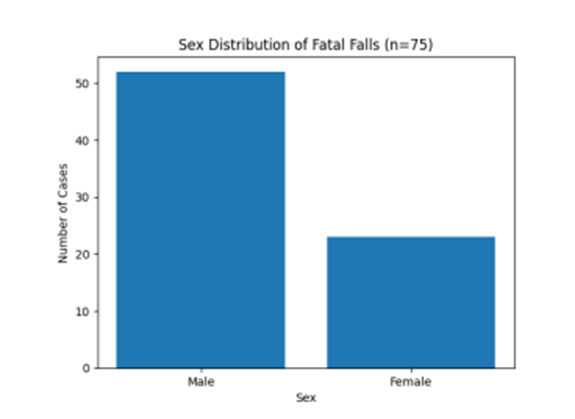
Figure 1: Represents sex distribution of fatal fall
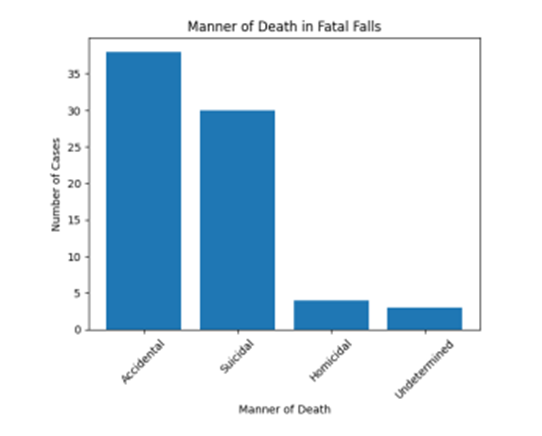
Figure 2: Represents manners of deaths in fatal fall
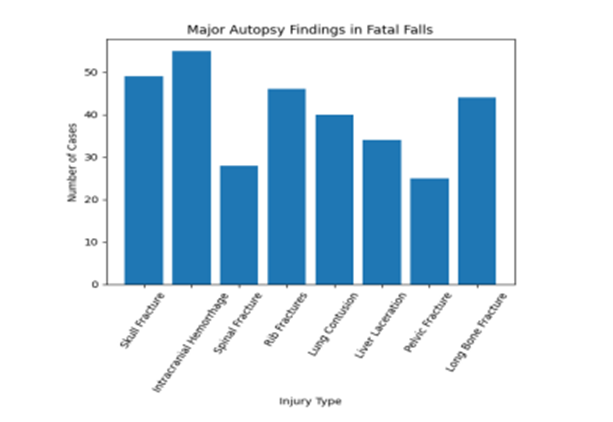
Figure 3: Represents major autopsy findings in fatal fall
DISCUSSION:
A definite male majority (68%) is shown in this study, which is in line with global epidemiological trends showing that men are more likely to be exposed to occupational dangers, take risks, and attempt suicide (7). The majority of cases (52%) were accidental falls, which were frequently linked to residential falls and workplace events, especially in construction settings. A significant percentage (37.3%) of falls were suicidal, which probably reflects how easy it is to injure oneself in high-rise structures. Despite being comparatively uncommon (4%), homicide cases have important medicolegal ramifications. It takes detailed defense injury assessment, witness statement analysis, painstaking scene reconstruction, and thorough toxicological investigation to distinguish between homicidal and suicidal falls (8).
The most common autopsy findings were skull fractures (62.6%). Either primary head impact or secondary rotational acceleration-deceleration forces during descent are reflected in these injuries (9). Lung contusions (52%) and rib fractures (57.3%) are examples of thoracic trauma that contributes to the prevalence of high-impact blunt force trauma. Significant kinetic energy transfer through the body is indicated by abdominal injuries including liver lacerations (42.6%). numerous foot-first strikes, numerous impacts, or secondary collisions during descent are suggested by the occurrence of multiple long bone fractures (53.3%).
To precisely ascertain the method of death and rule out other causes, medicolegal experts consider the following factors: identification of the primary impact site, analysis of injury distribution, evaluation of defense injuries, toxicological results, and association with scene evidence (5).
CONCLUSION:
A careful and methodical approach is necessary for accurate medicolegal interpretation of such deaths. To record both interior and external damage, a comprehensive autopsy is necessary. Determining the mechanism and orientation of impact is aided by a thorough examination of damage patterns. Contextual clarity is provided by correlation with scene discoveries, and the identification of contributing elements like drugs or alcohol is aided by toxicological investigation. All things considered, deadly falls from heights continue to be a leading cause of unnatural death, requiring thorough multidisciplinary forensic evaluation.
REFERENCES:
1. Ramadan MM, Elsayed A, Rahman A, Abdel N, Mahmoud R. Pitfalls Encountered during Documentation of Cases of Fatal Fall from Height Presented to Kafr EL Sheikh-Medico legal Department during the Period from (1999 to 2013). J Forensic Med Clin Toxicol. 2016;27(July):105–16.
2. Abdullah A, Juhani A, Aljohani NA, Binshalhoub AA, Desoky RM, Alotaibe RM. Forensic Differentiation of Accidental and Intentional Falls from Height : A Systematic Review of Injury Patterns , Severity Scores , and Classification Indicators. Saudi J Forensic Med Sci. 2025;5:6–18.
3. Ahmad M , Rahman FN , Al-Azad MAS , Majumder MRU CM. PATTERN OF FATAL INJURY IN FALL FROM HEIGHT CASES- A MEDICOLEGAL STUDY. JAFMC. 2014;10(1):80–4.
4. Dhingra V, Juglan S. International Journal of Forensic Sciences Forensic Aspects and Investigation of Death Due to Fall from Height- A Case Study. Int J Forensic Sci. 2020;5(2):000192.
5. T NK, Jagannatha SR, Venkatesha VT. Rise in Deaths Due to Fall from Height : A 3-Year Retrospective Study. Medico-legal Updat. 2019;19(2):2–5.
6. M PS. Medicolegal Aspects and Autopsy Study Of Cases Of Fall From Height. Int J Toxicol Pharmacol Res. 2024;14(8):170–7.
7. Mauro A, Roberta T, Francesca M, Giorgia C, Federico P, Ceccobelli G, et al. Distinguishing injury patterns in fatal falls from heights versus pedestrian impacts : an autopsy study for differential diagnosis in ambiguous cases. Forensic Sci Med Pathol. 2025;21:665–73.
8. Lakshmy S, Rv K, Vg P, Ar P. An Autopsy Based Study on Pattern of Fatal Injuries in Fall from Height. J Indian Acad Forensic Med. 2023;45(4):43–6.
9. Sado J, Kra K, Bryli K, Woli F. Fatal Free Falls : A Clinical and Forensic Analysis of Skeletal Injury Patterns Using PMCT and Autopsy. J Clin Med. 2025;14:1–35.