Clinical Profile and Outcome of Snake Bite Cases Presenting to the Emergency Department: A Prospective Observational Study.
- T. Raghavendra Chowdary , Senior Consultant, Department of Emergency Medicine, KIMS Saveera Hospital, Anantapur, Andhra Pradesh, India.
- Ravishankar Caleerappa , Senior Consultant, Department of Anesthesiology and Critical Care, KIMS Saveera Hospital, Anantapur, Andhra Pradesh, India.
- P. Kalyan Ram , Senior Consultant, Department of Emergency Medicine, KIMS Saveera Hospital, Anantapur, Andhra Pradesh, India.
Article Information:
Abstract:
Background: Snake bite remains a frequent emergency in tropical regions and contributes substantially to preventable morbidity and death, particularly among rural and occupationally exposed populations. Early assessment, prompt anti-snake venom administration, and supportive care influence clinical outcome. Objectives: To evaluate the demographic profile, clinical manifestations, laboratory abnormalities, treatment requirements, and outcomes of snake bite cases presenting to the Emergency Department. Methods: This prospective observational study included 100 consecutive patients with snake bite who presented to the Department of Emergency Medicine, KIMS Saveera Hospital, Anantapur, Andhra Pradesh, India, from April 2025 to March 2026. Demographic details, bite-related variables, clinical features, laboratory findings, treatment measures, complications, and final outcomes were recorded using a structured proforma. Results: The mean age was 36.8 +/- 15.4 years, and 64.0% of patients were male. Rural residence was noted in 74.0%, and the lower limb was the commonest bite site. The snake was identified in 64.0% of cases, with viper bite being the most common identified type. Local pain and swelling were the leading manifestations. Hemotoxic envenomation was observed in 42.0%, neurotoxic envenomation in 14.0%, and mixed envenomation in 4.0%. Prolonged whole blood clotting time occurred in 38.0%, acute kidney injury in 14.0%, and respiratory failure in 10.0%. Anti-snake venom was administered in 78.0% of patients. Complete recovery occurred in 92.0%, while mortality was 6.0%. Conclusion: Snake bite cases in this emergency cohort predominantly affected young rural males and commonly involved lower limb bites. Delayed presentation, systemic envenomation, respiratory failure, shock, and acute kidney injury were associated with poor outcome.
Keywords:
Article :
INTRODUCTION:
Snake bite envenoming is a major public health problem in tropical and subtropical countries, with a disproportionate effect on rural communities, agricultural workers, and socioeconomically vulnerable groups. Global estimates indicate a substantial annual burden of envenoming and death, with South Asia carrying one of the highest shares of mortality and disability [1,2]. India contributes a large proportion of the global snake bite burden, and national mortality studies have shown that deaths are concentrated in rural populations, during productive age groups, and in regions where access to timely emergency care is limited [3,4]. These features make snake bite not only an acute toxicological emergency but also an occupational and community health concern.
The clinical spectrum of snake bite is heterogeneous. Manifestations depend on the species involved, the amount of venom injected, bite site, host factors, first-aid practices, and time elapsed before definitive treatment. Viper bites usually produce local swelling, tissue injury, coagulopathy, bleeding manifestations, thrombocytopenia, and acute kidney injury, whereas elapid bites, particularly cobra and krait envenomation, are associated with neuroparalysis and respiratory failure [5,6]. However, overlap between hemotoxic, neurotoxic, and local cytotoxic patterns is well recognized, and in many emergency settings the biting species remains unidentified. Therefore, clinical syndrome-based assessment remains central to decision-making in emergency departments.
The outcome of snake bite is strongly influenced by early recognition of envenomation, avoidance of harmful traditional measures, rapid transport, timely anti-snake venom administration, and organ support when complications develop. Studies from different Indian regions have reported male predominance, frequent lower limb involvement, high rates of rural exposure, and variable rates of coagulopathy, renal dysfunction, respiratory failure, and death [7-10]. Acute kidney injury following hemotoxic envenomation is an important determinant of morbidity and frequently requires close biochemical monitoring and renal support [11]. Similarly, antivenom reactions and neurotoxic respiratory failure require preparedness in emergency and intensive care units [12,13].
Local data are important because snake species distribution, health-seeking behaviour, referral delays, and treatment resources vary across regions. Emergency departments serve as the first point of contact for many snake bite victims and provide an opportunity for early risk stratification. The present study was conducted to assess the clinical profile and outcome of snake bite cases presenting to the Emergency Department. The objectives were to describe demographic and bite-related characteristics, identify clinical and laboratory patterns of envenomation, document treatment requirements, and evaluate short-term outcomes among patients managed at a tertiary care hospital in Anantapur, Andhra Pradesh.
METHODOLOGY:
Study design and setting: This was a prospective observational study conducted in the Department of Emergency Medicine, KIMS Saveera Hospital, Anantapur, Andhra Pradesh, India. The hospital provides emergency, critical care, medical, surgical, nephrology, and laboratory services and receives snake bite patients directly from surrounding rural and urban areas as well as referred cases from peripheral health facilities. The study was carried out from April 2025 to March 2026.
Study population: All consecutive patients presenting to the Emergency Department with a history of snake bite during the study period were screened for eligibility. A total of 100 patients were included. Patients of all age groups and both sexes were eligible when there was a definite history of snake bite, witnessed bite, brought snake, visible fang marks, or clinical features compatible with envenomation. Patients with non-snake animal bites, insect stings, doubtful history without supportive clinical evidence, incomplete records, or refusal to participate were excluded.
Data collection: Data were collected using a structured case record proforma. Demographic variables included age, sex, and residence. Bite-related details included activity during bite, bite site, time from bite to hospital presentation, snake identification, pre-hospital tourniquet use, and native or traditional treatment. Clinical assessment included local pain, swelling, fang marks, cellulitis, blistering, bleeding manifestations, vomiting, ptosis, respiratory difficulty, altered sensorium, shock, and features of systemic envenomation. Patients were classified clinically as dry bite or no systemic envenomation, local envenomation only, hemotoxic envenomation, neurotoxic envenomation, or mixed envenomation based on clinical and laboratory findings [5,6].
Investigations and treatment: Laboratory evaluation included whole blood clotting time, complete blood count, platelet count, renal function tests, coagulation profile when indicated, and other tests guided by clinical status. Anti-snake venom was administered according to clinical evidence of systemic envenomation, progressive local toxicity, or laboratory evidence of coagulopathy. Patients were monitored for antivenom reactions and managed with standard emergency measures when reactions occurred [12]. Supportive care included wound care, analgesia, tetanus prophylaxis, antibiotics when clinically indicated, blood component therapy, mechanical ventilation, vasopressor support, haemodialysis, intensive care admission, and surgical consultation when required [5,9,13].
Outcome measures and statistical analysis: The primary outcome was final hospital outcome, categorized as complete recovery and discharge, left against medical advice, or death. Secondary outcomes included complications, anti-snake venom requirement, intensive care admission, ventilatory support, haemodialysis, and hospital stay. Data were entered into a spreadsheet and analyzed descriptively. Categorical variables were expressed as frequency and percentage. Continuous variables were summarized as mean with standard deviation or median, as appropriate.
Ethical considerations and bias control: The study was conducted after approval from the Institutional Ethics Committee of the study institution. Written informed consent was obtained from patients or legally authorized representatives. Confidentiality was maintained by anonymizing patient records. Consecutive enrolment reduced selection bias. A predesigned proforma, uniform clinical definitions, serial monitoring, and cross-checking of case records were used to reduce information bias and missing data.
RESULTS:
A total of 100 patients with snake bite presenting to the Emergency Department were included in the study. The mean age was 36.8 +/- 15.4 years. Most patients were aged 21-40 years, and males constituted 64.0% of the study population. Rural residence was common, and the lower limb was the most frequent bite site. Most patients presented within 6 hours of snake bite. The demographic and bite-related profile is shown in Table 1.
Table 1. Demographic and bite-related characteristics of the study population
|
Variable |
Frequency / Mean |
Percentage |
|
Total patients |
100 |
100.0 |
|
Mean age, years |
36.8 +/- 15.4 |
- |
|
Age <=20 years |
18 |
18.0 |
|
Age 21-40 years |
42 |
42.0 |
|
Age 41-60 years |
28 |
28.0 |
|
Age >60 years |
12 |
12.0 |
|
Male |
64 |
64.0 |
|
Female |
36 |
36.0 |
|
Rural residence |
74 |
74.0 |
|
Urban residence |
26 |
26.0 |
|
Agricultural/outdoor activity |
58 |
58.0 |
|
Indoor bite |
22 |
22.0 |
|
Bite during sleep |
20 |
20.0 |
|
Lower limb bite |
78 |
78.0 |
|
Upper limb bite |
20 |
20.0 |
|
Other bite sites |
2 |
2.0 |
|
Presentation within 3 hours |
38 |
38.0 |
|
Presentation between 3-6 hours |
27 |
27.0 |
|
Presentation after 6 hours |
35 |
35.0 |
The snake was identified in 64.0% of cases. Viper bite was the most common identified snake bite, followed by krait and cobra bites. Local pain and swelling were the most frequent clinical manifestations. Hemotoxic envenomation was the most common clinical pattern. The type of snake bite and clinical manifestations are presented in Table 2.
Table 2. Type of snake bite, clinical manifestations and envenomation pattern
|
Variable |
Frequency |
Percentage |
|
Identified snake |
64 |
64.0 |
|
Unidentified snake |
36 |
36.0 |
|
Viper bite |
42 |
42.0 |
|
Krait bite |
12 |
12.0 |
|
Cobra bite |
10 |
10.0 |
|
Pre-hospital tourniquet use |
38 |
38.0 |
|
Native/traditional treatment |
18 |
18.0 |
|
Local pain |
82 |
82.0 |
|
Local swelling |
76 |
76.0 |
|
Fang marks |
72 |
72.0 |
|
Cellulitis |
24 |
24.0 |
|
Blistering/local tissue injury |
12 |
12.0 |
|
Bleeding manifestations |
20 |
20.0 |
|
Vomiting |
18 |
18.0 |
|
Ptosis |
14 |
14.0 |
|
Respiratory difficulty |
10 |
10.0 |
|
Altered sensorium |
6 |
6.0 |
|
No systemic envenomation/dry bite |
22 |
22.0 |
|
Local envenomation only |
18 |
18.0 |
|
Hemotoxic envenomation |
42 |
42.0 |
|
Neurotoxic envenomation |
14 |
14.0 |
|
Mixed envenomation |
4 |
4.0 |
Laboratory abnormalities were mainly related to hemotoxic envenomation. Prolonged whole blood clotting time was observed in 38.0% of patients, followed by coagulopathy and thrombocytopenia. Acute kidney injury was seen in 14.0% of cases. Anti-snake venom was administered to 78.0% of patients, and intensive care admission was required in 24.0%. Laboratory abnormalities, complications and treatment details are shown in Table 3.
Table 3. Laboratory abnormalities, complications and treatment profile
|
Variable |
Frequency / Mean / Median |
Percentage |
|
Prolonged whole blood clotting time |
38 |
38.0 |
|
Coagulopathy |
32 |
32.0 |
|
Thrombocytopenia |
26 |
26.0 |
|
Raised serum creatinine |
18 |
18.0 |
|
Acute kidney injury |
14 |
14.0 |
|
Rhabdomyolysis |
8 |
8.0 |
|
Local cellulitis |
24 |
24.0 |
|
Compartment syndrome |
3 |
3.0 |
|
Respiratory failure |
10 |
10.0 |
|
Shock |
8 |
8.0 |
|
Anti-snake venom administered |
78 |
78.0 |
|
Median ASV requirement, vials |
10 |
- |
|
ASV reaction |
8 |
8.0 |
|
ICU admission |
24 |
24.0 |
|
Mechanical ventilation |
10 |
10.0 |
|
Haemodialysis |
6 |
6.0 |
|
Blood component therapy |
12 |
12.0 |
|
Surgical intervention/fasciotomy |
2 |
2.0 |
|
Mean hospital stay, days |
4.8 +/- 2.6 |
- |
The overall outcome was favourable in most patients. Complete recovery and discharge were observed in 92.0% of cases. Mortality was 6.0%, and two patients left against medical advice. Mortality was higher among patients presenting after 6 hours, those requiring mechanical ventilation, and those developing acute kidney injury. The clinical outcomes are summarized in Table 4.
Table 4. Clinical outcome and factors associated with poor outcome
|
Outcome / Risk factor |
Frequency |
Percentage |
|
Complete recovery and discharge |
92 |
92.0 |
|
Left against medical advice |
2 |
2.0 |
|
Death |
6 |
6.0 |
|
Mortality among patients presenting within 6 hours |
1/65 |
1.5 |
|
Mortality among patients presenting after 6 hours |
5/35 |
14.3 |
|
Mortality among patients requiring mechanical ventilation |
4/10 |
40.0 |
|
Mortality among patients with acute kidney injury |
3/14 |
21.4 |
|
Mortality among patients with shock |
3/8 |
37.5 |
|
Mortality among patients with respiratory failure |
4/10 |
40.0 |
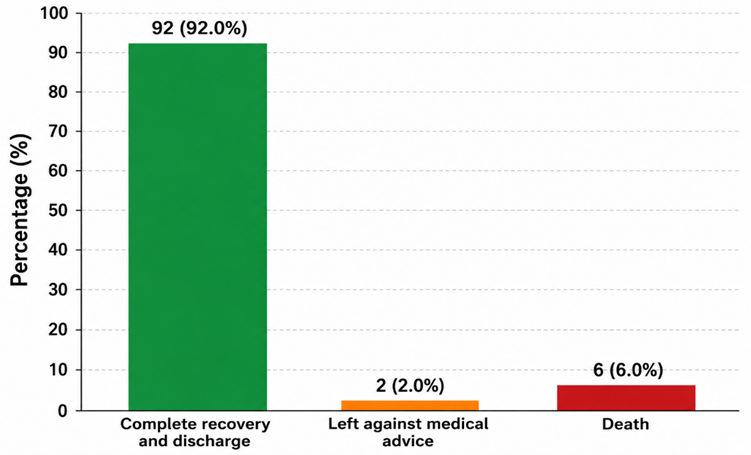
Figure 1: Overall Clinical Outcome
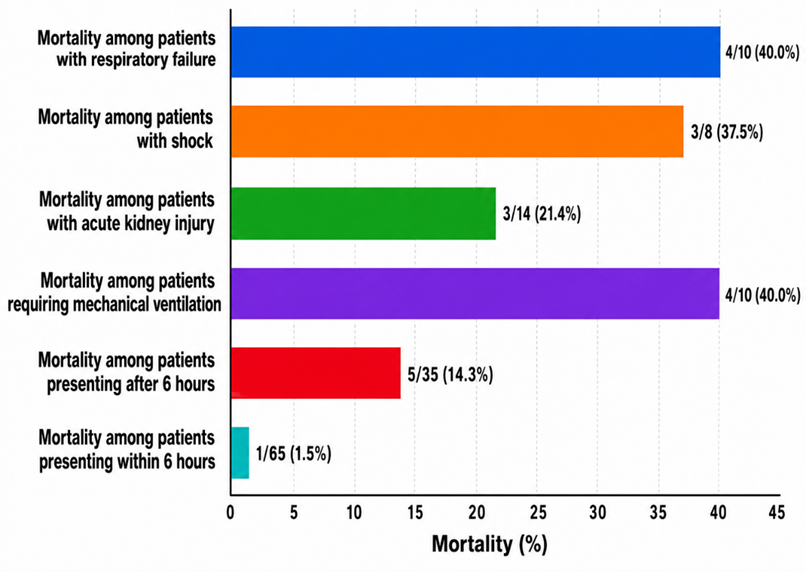
Figure 2: Mortality by Risk Factor/ Clinical Condition
Delayed presentation, systemic envenomation, respiratory failure, shock, acute kidney injury, and requirement for mechanical ventilation were associated with poor clinical outcome.
DISCUSSION:
In the present prospective observational study of 100 snake bite cases presenting to the Emergency Department, snake bite predominantly affected young and middle-aged adults, with the highest proportion in the 21-40-year age group. Male predominance, rural residence, outdoor exposure, and lower limb involvement were the key demographic and epidemiological features. This pattern is consistent with Indian and South Asian literature, where snake bite commonly occurs during agricultural, outdoor, and barefoot activities among economically active populations [4,6,7]. Similar demographic patterns have been reported from rural Maharashtra, Kerala, and West Bengal, supporting the occupational and environmental nature of snake bite exposure [7,8,14].
The snake was identified in nearly two-thirds of cases, and viper bite was the commonest identified type. This finding is clinically relevant because viper envenomation commonly produces local swelling, coagulopathy, thrombocytopenia, bleeding manifestations, and renal complications [5,11]. In this study, local pain and swelling were the leading clinical manifestations, while prolonged whole blood clotting time, coagulopathy, thrombocytopenia, and raised serum creatinine formed the major laboratory abnormalities. The predominance of hemotoxic envenomation was comparable to studies from several Indian centres, although regional variation in snake fauna and referral patterns can alter the proportion of neurotoxic and hemotoxic cases [8,10]. Neurotoxic manifestations were seen in a smaller but clinically important subset. Ptosis, respiratory difficulty, respiratory failure, and need for mechanical ventilation reflected the severity of neuroparalytic envenomation. Previous studies have emphasized that neurotoxic snake bite requires early airway assessment, ventilatory preparedness, and antivenom therapy when systemic envenomation is evident [5,13]. In the present study, patients requiring mechanical ventilation had a high mortality proportion, highlighting the importance of rapid recognition of respiratory muscle weakness and timely referral to centres with intensive care support.
Acute kidney injury occurred in 14.0% of patients, a finding close to earlier Indian reports of renal involvement following snake bite [11]. Renal dysfunction in snake bite is multifactorial and is linked to hemotoxic venom effects, hypotension, pigment nephropathy, coagulopathy, and delayed treatment. The requirement for haemodialysis in 6.0% of patients indicates that emergency departments managing snake bite need reliable access to renal monitoring and nephrology support. The higher mortality among patients with acute kidney injury in this study further reinforces renal involvement as an important marker of poor prognosis. Anti-snake venom was administered in 78.0% of patients, and antivenom reaction was documented in 8.0%. This rate underscores the need for careful monitoring during infusion and immediate availability of medications for hypersensitivity reactions [12]. The overall mortality was 6.0%, with delayed presentation, shock, respiratory failure, acute kidney injury, and mechanical ventilation requirement emerging as adverse outcome markers. The observed mortality pattern agrees with studies showing that longer bite-to-treatment intervals increase complications, antivenom requirement, hospital stay, and death [9]. These findings support community education, avoidance of harmful pre-hospital practices, early transport, and protocol-based emergency management as practical measures to improve outcomes.
Limitations
This study was conducted at a single tertiary care centre with a sample size of 100 patients, restricting wider regional representation. Snake identification was based on patient report or available evidence in several cases. Long-term complications, functional disability, psychological impact, and post-discharge renal outcomes were not evaluated. Seasonal clustering and referral delay patterns also require larger multicentre analysis.
CONCLUSION:
Snake bite cases presenting to the Emergency Department predominantly involved young rural males, with lower limb bites and outdoor exposure being common. Viper bite and hemotoxic envenomation formed the major clinical pattern. Local pain, swelling, prolonged whole blood clotting time, coagulopathy, thrombocytopenia, and acute kidney injury were important findings. Most patients recovered with anti-snake venom and supportive care; however, mortality occurred in 6.0%. Delayed presentation, systemic envenomation, respiratory failure, shock, acute kidney injury, and need for mechanical ventilation were associated with poor outcome. Early hospital presentation, avoidance of harmful pre-hospital practices, prompt anti-snake venom therapy, and critical care support remain essential to reduce morbidity and mortality.
REFERENCES:
1. Kasturiratne A, Wickremasinghe AR, de Silva N, Gunawardena NK, Pathmeswaran A, Premaratna R, et al. The global burden of snakebite: a literature analysis and modelling based on regional estimates of envenoming and deaths. PLoS Med. 2008;5(11):e218. doi:10.1371/journal.pmed.0050218. PMID:18986210.
2. Gutiérrez JM, Calvete JJ, Habib AG, Harrison RA, Williams DJ, Warrell DA. Snakebite envenoming. Nat Rev Dis Primers. 2017;3:17063. doi:10.1038/nrdp.2017.63. PMID:28905944.
3. Suraweera W, Warrell D, Whitaker R, Menon G, Rodrigues R, Fu SH, et al. Trends in snakebite deaths in India from 2000 to 2019 in a nationally representative mortality study. Elife. 2020;9:e54076. doi:10.7554/eLife.54076. PMID:32633232.
4. Mohapatra B, Warrell DA, Suraweera W, Bhatia P, Dhingra N, Jotkar RM, et al. Snakebite mortality in India: a nationally representative mortality survey. PLoS Negl Trop Dis. 2011;5(4):e1018. doi:10.1371/journal.pntd.0001018. PMID:21532748.
5. Warrell DA. Snake bite. Lancet. 2010;375(9708):77-88. doi:10.1016/S0140-6736(09)61754-2. PMID:20109866.
6. Alirol E, Sharma SK, Bawaskar HS, Kuch U, Chappuis F. Snake bite in South Asia: a review. PLoS Negl Trop Dis. 2010;4(1):e603. doi:10.1371/journal.pntd.0000603. PMID:20126271.
7. Bawaskar HS, Bawaskar PH, Punde DP, Inamdar MK, Dongare RB, Bhoite RR. Profile of snakebite envenoming in rural Maharashtra, India. J Assoc Physicians India. 2008;56:88-95. PMID:18472507.
8. Suchithra N, Pappachan JM, Sujathan P. Snakebite envenoming in Kerala, South India: clinical profile and factors involved in adverse outcomes. Emerg Med J. 2008;25(4):200-204. doi:10.1136/emj.2007.051136. PMID:18356348.
9. Jayaraman T, Dhanasinghu R, Kuppusamy S, Gaur A, Sakthivadivel V. Bite-to-needle Time - An Extrapolative Indicator of Repercussion in Patients with Snakebite. Indian J Crit Care Med. 2022;26(11):1175-1178. doi:10.5005/jp-journals-10071-24344. PMID:36873588.
10. Kumar KGS, Narayanan S, Udayabhaskaran V, Thulaseedharan NK. Clinical and epidemiologic profile and predictors of outcome of poisonous snake bites - an analysis of 1,500 cases from a tertiary care center in Malabar, North Kerala, India. Int J Gen Med. 2018;11:209-216. doi:10.2147/IJGM.S136153. PMID:29892202.
11. Harshavardhan L, Lokesh AJ, Tejeshwari HL, Halesha BR, Metri SS. A study on the acute kidney injury in snake bite victims in a tertiary care centre. J Clin Diagn Res. 2013;7(5):853-856. doi:10.7860/JCDR/2013/5495.2957. PMID:23814727.
12. de Silva HA, Ryan NM, de Silva HJ. Adverse reactions to snake antivenom, and their prevention and treatment. Br J Clin Pharmacol. 2016;81(3):446-452. doi:10.1111/bcp.12739. PMID:26256124.
13. Anil A, Singh S, Bhalla A, Sharma N, Agarwal R, Simpson ID. Role of neostigmine and polyvalent antivenom in Indian common krait (Bungarus caeruleus) bite. J Infect Public Health. 2010;3(2):83-87. doi:10.1016/j.jiph.2010.01.002. PMID:20701896.
14. Mana K, Ghosh R, Gantait K, Saha K, Parua P, Chatterjee U, Sarkhel S. Incidence and treatment of snakebites in West Bengal, India. Toxicol Rep. 2019;6:239-243. doi:10.1016/j.toxrep.2019.02.008. PMID:30899676.