ASSESSMENT OF EARLY FUNCTIONAL OUTCOMES AND PATIENT SATISFACTION FOLLOWING LASER HEMORRHOIDOPLASTY IN GRADE II AND III HEMORRHOIDS.
- Vikash Lal. , Consultant, MBBS, MS (General Surgery), DMAS, FMAS, Department of Surgery, Gobardhan Lal Nursing Home, India.
Article Information:
Abstract:
Introduction: Hemorrhoidal disease is a common anorectal condition that affects quality of life. Laser hemorrhoidoplasty (LHP) is a minimally invasive technique offering reduced pain, faster recovery, and improved outcomes. This study evaluates early functional outcomes and patient satisfaction in Grade II and III hemorrhoids. Aims and Objectives: The aim of this study is to evaluate early functional outcomes and patient satisfaction following laser hemorrhoidoplasty in Grade II and III hemorrhoids, focusing on postoperative pain, recovery time, complications, and return to normal activities. Materials and Methods: A prospective observational study was conducted over January 2025 to December 2025 at Gobardhan Lal Nursing Home in 100 patients with Grade II and III hemorrhoids undergoing laser hemorrhoidoplasty. Results: In this study of 100 patients, males were predominant (58%) with Grade II (56%) and Grade III (44%) hemorrhoids, mostly in the 41–50 years age group. Pain reduced significantly from 4.8 ± 1.1 to 0.9 ± 0.6 by day 7 (p < 0.001), with early recovery (3.6 ± 1.2 days) and return to work (5.2 ± 1.8 days) (p < 0.001). Overall, 86% reported good to excellent satisfaction, indicating favorable outcomes after laser hemorrhoidoplasty (p = 0.032). Conclusion: Laser hemorrhoidoplasty is a safe, minimally invasive option for Grade II and III hemorrhoids with good early outcomes and high patient satisfaction. It provides effective symptom relief with faster recovery and less morbidity compared to conventional surgery. It can be considered a reliable alternative in suitable patients.
Keywords:
Article :
INTRODUCTION:
Hemorrhoidal disease is one of the most common benign anorectal disorders encountered in surgical practice, affecting a significant proportion of the adult population worldwide. It is characterized by symptomatic enlargement and distal displacement of the normal vascular cushions within the anal canal, leading to bleeding per rectum, prolapse, pain, itching, and discomfort. Grade II and III hemorrhoids, in particular, represent a stage where symptoms become more pronounced and often require procedural intervention when conservative management fails. Traditional surgical techniques such as conventional hemorrhoidectomy, although effective, are frequently associated with considerable postoperative pain, delayed wound healing, and prolonged recovery, which may negatively affect patient satisfaction and return to normal activity [1].
In recent years, minimally invasive techniques have gained popularity due to their potential to reduce postoperative morbidity while maintaining therapeutic efficacy. Laser hemorrhoidoplasty (LHP) is one such technique that utilizes diode laser energy to induce photocoagulation of hemorrhoidal tissue and submucosal vascular plexus, leading to shrinkage of hemorrhoidal cushions without extensive excision of anoderm. This tissue-preserving approach is associated with reduced tissue trauma, minimal bleeding, and improved postoperative comfort compared to conventional excisional procedures [2]. The growing interest in LHP is largely driven by its ability to address key limitations of traditional hemorrhoid surgery, particularly postoperative pain and delayed recovery. Several studies have demonstrated that patients undergoing laser-based procedures experience lower pain scores, reduced need for analgesics, and earlier return to daily activities when compared with conventional hemorrhoidectomy techniques [3].
Furthermore, the absence of large open wounds in LHP contributes to decreased risk of wound infection and faster healing, which is particularly important in an area prone to contamination. Patient satisfaction has emerged as a critical outcome measure in modern surgical practice, especially for benign conditions such as hemorrhoids where quality of life considerations are paramount. Satisfaction is influenced not only by symptom relief but also by perioperative experience, pain levels, cosmetic outcomes, and speed of functional recovery. In this context, minimally invasive procedures like LHP are increasingly being evaluated not only for clinical efficacy but also for their impact on patient-reported outcomes [4]. Despite these advantages, laser hemorrhoidoplasty is not without limitations. Concerns remain regarding recurrence rates, variability in laser settings, and long-term durability of symptom relief compared to conventional excisional surgery. Some studies have suggested that while early postoperative outcomes are favorable, long-term recurrence may still occur in a subset of patients, necessitating careful patient selection and standardized procedural protocols [5].
The management of Grade II and III hemorrhoids continues to evolve with advancements in technology and surgical techniques. A balanced evaluation of early functional outcomes—including pain, recovery time, and complications—and patient satisfaction is essential to determine the true clinical value of newer modalities such as LHP. In low-resource and high-volume settings, where rapid recovery and reduced hospital stay are particularly advantageous, minimally invasive techniques may offer significant practical benefits [6]. In addition, the economic implications of faster return to work and reduced postoperative care further enhance the attractiveness of laser-based approaches. However, evidence from comparative studies remains heterogeneous, and there is a need for well-designed prospective studies focusing on standardized outcome measures to better define the role of LHP in routine clinical practice [7].
Therefore, the present study is undertaken to assess early functional outcomes and patient satisfaction following laser hemorrhoidoplasty in Grade II and III hemorrhoids, with particular emphasis on postoperative pain, recovery profile, complication rates, and overall patient-reported satisfaction [8]. In conclusion, laser hemorrhoidoplasty represents a promising minimally invasive alternative to conventional hemorrhoidectomy, with potential benefits in terms of reduced postoperative pain and improved patient-centered outcomes. However, ongoing evaluation is necessary to establish its long-term effectiveness and optimal clinical indications [9,10]. The aim of this study is to evaluate early functional outcomes and patient satisfaction following laser hemorrhoidoplasty in Grade II and III hemorrhoids, focusing on postoperative pain, recovery time, complications, and return to normal activities.
MATERIALS AND METHODS:
Study design: Prospective observational study.
Study setting: Gobardhan Lal Nursing home.
Period of study: 12 months duration (January 2025 to December 2025).
Study population: The study population consisted of 100 patients diagnosed with Grade II and Grade III Hemorrhoids who attended Gobardhan Lal Nursing Home during the study period of one year and met the inclusion criteria for undergoing laser Hemorrhoidoplasty, after providing informed consent and satisfying preoperative evaluation requirements. Sample size: 100
Inclusion criteria:
• Patients diagnosed with Grade II and Grade III hemorrhoids
• Patients aged 18 years and above
• Patients presenting with symptomatic hemorrhoids (bleeding, prolapse, pain, or discomfort)
• Patients fit for surgical procedure under local/spinal anesthesia
• Patients who provided informed written consent for laser hemorrhoidoplasty
• Patients willing to comply with follow-up protocol
Exclusion criteria:
• Patients with Grade I and Grade IV hemorrhoids
• Patients with complicated hemorrhoids (thrombosed, strangulated, or gangrenous)
• Patients with associated anorectal conditions (fissure, fistula, malignancy)
• Patients with bleeding disorders or on anticoagulant therapy not suitable for surgery
• Patients with severe comorbidities unfit for anesthesia or surgery
• Pregnant and lactating women
• Patients unwilling or lost to follow-up
Statistical analysis: For statistical analysis data were entered into a Microsoft Excel spreadsheet and then analyzed by SPSS (version 27.0; SPSS Inc., Chicago, IL, USA) and Graph Pad Prism version 5. Data had been summarized as mean and standard deviation for numerical variables and count and percentages for categorical variables.
Z-test (Standard Normal Deviate) was used to test the significant difference of proportions. Once a t value is determined, a p-value can be found using a table of values from Student's t-distribution. If the calculated p-value is below the threshold chosen for statistical significance (usually the 0.10, the 0.05, or 0.01 level), then the null hypothesis is rejected in favor of the alternative hypothesis. P-value ≤ 0.05 was considered for statistically significant.
RESULTS:
Table 01: Age Distribution of Study Population (n=100)
|
Age Group (years) |
No. of Patients (n) |
Percentage (%) |
|
18–30 |
18 |
18% |
|
31–40 |
26 |
26% |
|
41–50 |
32 |
32% |
|
51–60 |
18 |
18% |
|
>60 |
6 |
6% |
|
Total |
100 |
100% |
Table 02: Gender Distribution
|
Gender |
No. of Patients (n) |
Percentage (%) |
p-value |
|
Male |
58 |
58% |
0.109 |
|
Female |
42 |
42% |
|
|
Total |
100 |
100% |
Table 03: Grade of Hemorrhoids
|
Grade |
No. of Patients (n) |
Percentage (%) |
p-value |
|
Grade II |
56 |
56% |
0.23 |
|
Grade III |
44 |
44% |
|
|
Total |
100 |
100% |
Table 04: Mean Pain Score (VAS) Postoperatively
|
Time Interval |
Mean VAS Score ± SD |
p-value |
|
6 hours |
4.8 ± 1.1 |
<0.001 |
|
24 hours |
3.2 ± 0.9 |
<0.001 |
|
48 hours |
2.1 ± 0.8 |
<0.001 |
|
Day 7 |
0.9 ± 0.6 |
<0.001 |
Table 05: Recovery Time
|
Recovery Parameter |
Mean ± SD |
p-value |
|
Return to normal activity |
3.6 ± 1.2 days |
<0.001 |
|
Return to work |
5.2 ± 1.8 days |
Table 06: Patient Satisfaction
|
Satisfaction Level |
No. of Patients (n) |
Percentage (%) |
p-value |
|
Excellent |
52 |
52% |
0.032 |
|
Good |
34 |
34% |
|
|
Fair |
10 |
10% |
|
|
Poor |
4 |
4% |
|
|
Total |
100 |
100% |
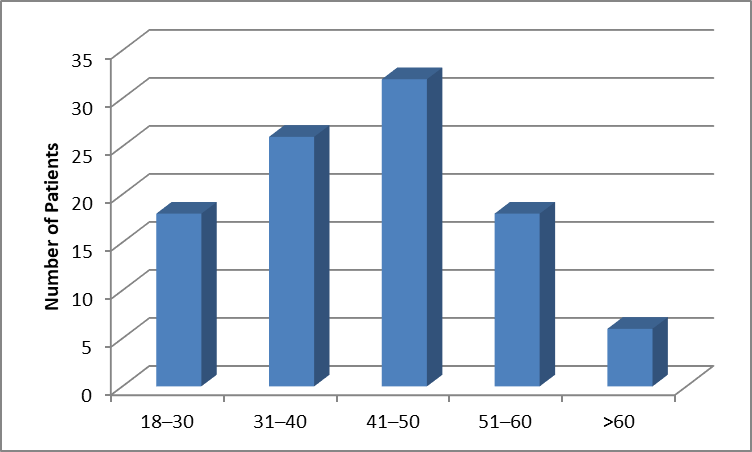 Figure 1: Age Distribution of Study Population.
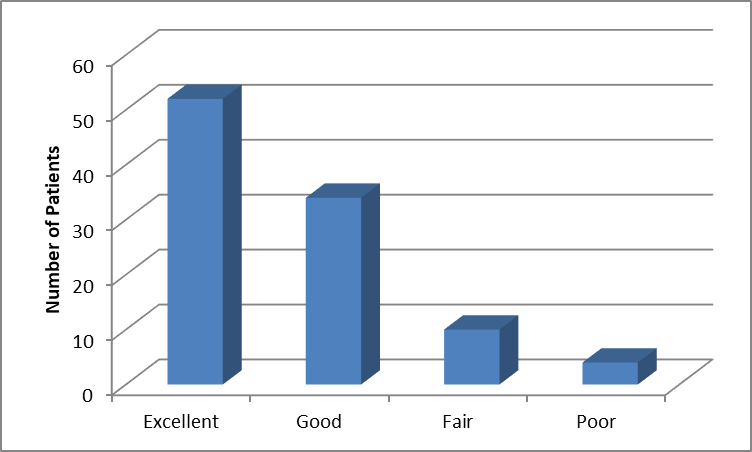
Figure 2: Patient Satisfaction.
Demographic Characteristics of Study Population (n=100)
Result:
In the study population, 58 patients (58%) were male and 42 patients (42%) were female. The difference in gender distribution was not statistically significant (p = 0.109). Regarding grade of hemorrhoids, 56 patients (56%) had Grade II hemorrhoids and 44 patients (44%) had Grade III hemorrhoids (p = 0.23). The majority of patients were in the 41–50 years age group (32%), followed by 31–40 years (26%), 18–30 years (18%), 51–60 years (18%), and >60 years (6%).
Interpretation:
The study showed a slight male predominance; however, gender distribution was not statistically significant. Grade II and Grade III hemorrhoids were almost equally distributed, indicating comparable disease severity among patients included in the study. The condition was most commonly observed in middle-aged individuals, particularly between 31–50 years, suggesting higher prevalence in the productive age group.
Postoperative Pain Profile (VAS Score)
Result:
The mean VAS score at 6 hours postoperatively was 4.8 ± 1.1, which decreased to 3.2 ± 0.9 at 24 hours, 2.1 ± 0.8 at 48 hours, and 0.9 ± 0.6 on day 7. The reduction in pain scores over time was statistically highly significant (p < 0.001).
Interpretation:
There was a significant progressive reduction in postoperative pain following laser hemorrhoidoplasty. This indicates that the procedure is associated with effective pain control and favorable early postoperative recovery.
Functional Recovery Outcome
Result:
The mean time for return to normal daily activities was 3.6 ± 1.2 days, and return to work was 5.2 ± 1.8 days. The outcomes were statistically significant (p < 0.001).
Interpretation:
Patients demonstrated early functional recovery after laser hemorrhoidoplasty, suggesting minimal tissue trauma and faster resumption of routine activities.
Patient Satisfaction Outcome
Result:
Out of 100 patients, 52 patients (52%) reported excellent satisfaction, 34 patients (34%) reported good satisfaction, 10 patients (10%) reported fair satisfaction, and 4 patients (4%) reported poor satisfaction. The overall satisfaction outcome was statistically significant (p = 0.032).
Interpretation:
The majority of patients reported good to excellent satisfaction, indicating high acceptability of laser hemorrhoidoplasty. Low rates of fair and poor satisfaction reflect favorable patient-reported outcomes and procedural success.
DISCUSSION:
In the present study, laser hemorrhoidoplasty demonstrated a favorable demographic distribution with a slight male predominance, although the difference was not statistically significant. This finding is consistent with earlier studies which have shown no strong gender predilection for hemorrhoidal disease, suggesting that both sexes are equally affected, with variations mainly attributed to lifestyle and health-seeking behavior [11,12]. The peak incidence in the 31–50 years age group reflects the typical distribution of hemorrhoidal disease in middle-aged adults, which has been widely reported in literature and is attributed to increased sedentary work patterns, dietary habits, and straining during defecation [13,14].
Similar observations have been reported in large epidemiological studies highlighting middle age as the most affected period for symptomatic hemorrhoids [15]. Regarding disease severity, the nearly equal distribution of Grade II and Grade III hemorrhoids indicates a moderate spectrum of disease suitable for minimally invasive intervention. Comparable findings have been described in studies evaluating laser and other office-based procedures, where Grade II–III hemorrhoids form the majority of surgical candidates [16,17]. This supports the appropriateness of laser hemorrhoidoplasty in patients where conventional excisional surgery may lead to unnecessary morbidity [18].
Postoperative pain is a key determinant of recovery and patient satisfaction. In the present study, there was a statistically significant and progressive reduction in VAS scores from 6 hours to day 7, indicating excellent pain control following laser hemorrhoidoplasty. Similar reductions in postoperative pain have been reported in laser-based hemorrhoidal procedures, where minimal tissue dissection results in reduced inflammatory response and faster healing [19]. These findings are in agreement with comparative studies showing significantly lower pain scores in laser techniques compared to conventional hemorrhoidectomy. Functional recovery was also notably rapid, with patients returning to daily activities and work within a short duration.
This early recovery reflects reduced postoperative morbidity and minimal disruption of anorectal anatomy, as reported in other minimally invasive hemorrhoid treatment studies. Such rapid recovery has significant socioeconomic implications, especially in working-age populations. Patient satisfaction was high in the present study, with the majority reporting good to excellent outcomes. This aligns with published literature demonstrating high acceptability of laser hemorrhoidoplasty due to reduced postoperative pain, faster recovery, and improved quality of life. The small proportion of less satisfied patients may be related to individual variations in disease severity or residual symptoms, as also noted in previous comparative studies [20]. Overall, the present study supports laser hemorrhoidoplasty as an effective minimally invasive option for Grade II–III hemorrhoids, providing excellent pain control, early functional recovery, and high patient satisfaction.
CONCLUSION:
Laser hemorrhoidoplasty is an effective minimally invasive treatment modality for Grade II and Grade III hemorrhoids, demonstrating excellent clinical outcomes in terms of significant postoperative pain reduction, early return to normal daily activities and work, and high patient satisfaction. The procedure is associated with minimal tissue trauma, leading to faster recovery and improved postoperative comfort compared to conventional surgical techniques. The present study supports laser hemorrhoidoplasty as a safe, feasible, and patient-friendly option with good acceptability and favorable short-term outcomes, making it a promising alternative in the management of symptomatic hemorrhoidal disease.
REFERENCES:
1. Lohsiriwat V. Treatment of hemorrhoids: a coloproctologist’s view. World J Gastroenterol. 2015;21(31):9245–9252.
2. Zou S, Li X, Yang YB, Zeng Y, Yang Y, Gan Q, Su J, Lu C. A Comprehensive Evidence Summary for Pain Assessment and Management After Hemorrhoidal Surgery to Inform Clinical Practice Guidelines. Journal of Multidisciplinary Healthcare. 2025 Dec 31:6857-70.
3. Brown SR, Tiernan JP, Biggs K, et al. Hemorrhoidal disease: surgical management and outcomes. Ann R Coll Surg Engl. 2017;99(3):170–176.
4. Ommer A, Wenger FA, Rolfs T, Walz MK. Continence disorders after anal surgery—a relevant problem? Int J Colorectal Dis. 2018;33(1):1–7.
5. Stanojević G, Branković B, Nestorović M, Milutinović N. Surgical treatment of hemorrhoidal disease. InAnorectal Disorders-From Diagnosis to Treatment 2023 Nov 20. IntechOpen.
6. Alsararatee H. Lower gastrointestinal signs and symptoms: assessment, investigations, diagnosis and management strategies. Gastrointestinal Nursing. 2024 Oct 1;22(Sup8):S10-23.
7. Khan K, Lakshminarayan R, Yiasemidou M, Long J, Sayeed S, Smith GE, Hunter I, Chetter I. Endovascular rectal artery embolisation (RAE) for symptomatic haemorrhoids. The Cochrane Database of Systematic Reviews. 2024 May 16;2024(5):CD014829.
8. Wee IJY, Koo CH, Seow-En I, Ng YYR, Lin W, Tan EJKW. Laser hemorrhoidoplasty versus conventional hemorrhoidectomy for grade II/III hemorrhoids: a systematic review and meta-analysis. Ann Coloproctol. 2023;39(1):3–10.
9. Oliveira FDP, Scolaro BL, Blitzkow ACB, et al. Laser hemorrhoidoplasty for grade III hemorrhoidal disease: safety and efficacy. Tech Coloproctol. 2025;29(3):215–223.
10. Barnwell A. Examining the decision-making theories employed by nurses to diagnose a patient presenting with a rectal bleed. Gastrointestinal Nursing. 2016 Feb 2;14(1):18-25.
11. Wilhelm A. Laser hemorrhoidoplasty: early outcomes of a minimally invasive technique. Tech Coloproctol. 2015;19(2):123–128.
12. Oberi IA, Omar Y, Alfaifi AJ, Ayoub RA, Ajeebi Y, Moafa SH, Elhilu AH, Ayoub AH, Gosadi IM, Moafa S, Elhilu A. Prevalence of hemorrhoids and their risk factors among the adult population in Jazan, Saudi Arabia. Cureus. 2023 Sep 25;15(9).
13. Kibret AA, Oumer M, Moges AM. Prevalence and associated factors of hemorrhoids among adult patients visiting the surgical outpatient department in the University of Gondar Comprehensive Specialized Hospital, Northwest Ethiopia. Plos one. 2021 Apr 20;16(4):e0249736.
14. De Nardi P, Maggi G, Pagnanelli M, et al. Hemorrhoidal laser procedures: systematic review and meta-analysis. Tech Coloproctol. 2023;27(1):1–12.
15. Godeberge P, Csiki Z, Zakharash M, Opot EN, Shelygin YA, Nguyen TT, Amir A, Konaté I, Momoh M, Chirol J, Blanc-Guillemaud V. An international observational study assessing conservative management in hemorrhoidal disease: results of CHORALIS (aCute HemORrhoidal disease evALuation International Study). Journal of Comparative Effectiveness Research. 2024 Oct;13(10):e240070.
16. Wee I J Y, Koo C H, Seow-En I, et al. Laser hemorrhoidoplasty versus conventional hemorrhoidectomy: systematic review and meta-analysis. Ann Coloproctol. 2023;39(1):3–10.
17. Lie H, Caesarini E F, Purnama A A, et al. Laser hemorrhoidoplasty for hemorrhoidal disease: systematic review and meta-analysis. Lasers Med Sci. 2022;37(9):3621–3630.
18. Pucher P H, Sodergren M H, et al. Surgical treatment of hemorrhoids: systematic review of minimally invasive approaches. Colorectal Dis. 2015;17(10):825–832.
19. Sun Z, Migaly J. Review of hemorrhoid disease: presentation and management. Clin Colon Rectal Surg. 2016;29(1):22–29.
20. Riss S, Weiser F A, Schwameis K, et al. Epidemiology and prevalence of hemorrhoidal disease in adults. Int J Colorectal Dis. 2016;31(2):207–215.