Clinical and Biochemical Predictors of Prolonged Hospital Stay Among Patients Admitted with Acute Exacerbation of Chronic Obstructive Pulmonary Disease: A Prospective Observational Study.
- Jayaprakash B , Professor and HOD, Department of Respiratory Medicine, Sree Mookambika Institute of Medical Sciences, Kulasekharam, India.
- S Praveen Kumar , Junior Resident, Department of Respiratory Medicine, Sree Mookambika Institute of Medical Sciences, Kulasekharam, India.
Article Information:
Abstract:
Abstract Background: Acute exacerbations of chronic obstructive pulmonary disease (AECOPD) are a major cause of hospitalization and healthcare burden. Identifying predictors of prolonged hospital stay is essential for improving patient outcomes and optimizing resource utilization. Aim: To identify clinical, laboratory, and radiological predictors of prolonged hospital stay among patients admitted with AECOPD. Methods: This prospective observational study was conducted in a tertiary care hospital and included 100 patients admitted with AECOPD. Data on demographic characteristics, comorbidities, clinical parameters, arterial blood gas analysis, and chest radiographic findings were collected. Prolonged hospital stay was defined as duration exceeding 7 days. Statistical analysis included univariate and multivariate logistic regression to identify independent predictors. Results: Among the 100 patients, 42% had prolonged hospital stay (>7 days). Factors significantly associated with prolonged hospitalization included age >60 years (71.4% vs 34.5%, p<0.001), diabetes mellitus (57.1% vs 24.1%, p=0.001), hypoxemia (PaO₂ <60 mmHg; 76.2% vs 31.0%, p<0.001), hypercapnia (PaCO₂ >50 mmHg; 66.7% vs 27.6%, p<0.001), and consolidation on chest radiograph (47.6% vs 13.8%, p<0.001). Multivariate analysis revealed PaO₂ <60 mmHg (AOR 3.6, p=0.001), consolidation (AOR 3.2, p=0.004), and age >60 years (AOR 2.8, p=0.008) as independent predictors. Conclusion: Hypoxemia, radiological consolidation, and advanced age are key predictors of prolonged hospital stay in AECOPD patients. Early identification of these factors can aid in risk stratification and targeted management strategies.
Keywords:
Article :
INTRODUCTION:
Acute exacerbation of chronic obstructive pulmonary disease (AECOPD) is a major cause of morbidity, mortality, and healthcare utilization worldwide. Chronic obstructive pulmonary disease (COPD) is characterized by persistent airflow limitation associated with chronic inflammatory responses in the airways and lungs, usually resulting from exposure to noxious particles and cigarette smoke[1]. Acute exacerbations are defined as episodes of worsening respiratory symptoms such as dyspnea, cough, and sputum production that require additional treatment or hospitalization[2]. These exacerbations contribute significantly to disease progression, decline in lung function, impaired quality of life, and increased economic burden on healthcare systems. Globally, COPD is currently one of the leading causes of death and is projected to become the third leading cause of mortality worldwide[3].
In India, COPD represents a substantial public health challenge because of increasing exposure to tobacco smoke, biomass fuel combustion, occupational pollutants, and environmental air pollution. Hospital admissions due to AECOPD account for a major proportion of COPD-related healthcare expenditure, and prolonged hospital stay further increases treatment costs, risk of hospital-acquired infections, and mortality[4]. Identifying patients at risk for prolonged hospitalization is therefore essential for optimizing patient management and resource allocation. Several clinical and biochemical factors have been implicated in determining the duration of hospital stay among patients admitted with AECOPD. Advanced age, smoking history, severe airflow obstruction, hypoxemia, hypercapnia, comorbid illnesses, and radiological abnormalities have all been associated with poor clinical outcomes and delayed recovery[5].
Arterial blood gas abnormalities, particularly low PaO₂ and elevated PaCO₂ levels, reflect severe respiratory compromise and have been identified as important prognostic markers[6]. Similarly, comorbid conditions such as diabetes mellitus and cardiovascular disease may adversely affect treatment response and prolong hospitalization.
Previous studies have attempted to identify predictors of prolonged hospital stay in AECOPD patients. Crisafulli et al. reported that advanced age, respiratory failure, and associated comorbidities significantly increased the duration of hospitalization among COPD patients admitted with exacerbation[7]. In another study, Roche et al. observed that hypoxemia, hypercapnia, and radiological consolidation were strongly associated with poor in-hospital outcomes and longer hospital stay[8]. Studies by Almagro et al. also demonstrated that the presence of comorbid diseases independently influenced prognosis and healthcare utilization in COPD patients[9].
However, the relative contribution of various clinical, laboratory, and radiological parameters may differ across populations and healthcare settings. Despite the growing burden of COPD in developing countries, limited data are available from South India regarding factors predicting prolonged hospital stay in AECOPD patients. Early identification of high-risk patients could help clinicians initiate aggressive management strategies, improve monitoring, reduce complications, and shorten hospitalization duration. Therefore, the present study was undertaken to evaluate the clinical, laboratory, and radiological predictors of prolonged hospital stay among patients admitted with acute exacerbation of chronic obstructive pulmonary disease in a tertiary care center.
Aim and objectives
Aim of the Study
To identify clinical, laboratory, and radiological factors that predict prolonged hospital stay in patients admitted with acute exacerbation of chronic obstructive pulmonary disease (AECOPD).
Objectives of the Study
1) To assess the association between demographic and clinical parameters (age, gender, smoking status, comorbidities, severity of COPD) and duration of hospital stay in AECOPD patients.
2) To evaluate the role of laboratory and radiological parameters (arterial blood gas analysis, serum biomarkers, chest imaging findings) in predicting prolonged hospitalization.
3) To determine independent prognostic indicators of prolonged hospital stay using multivariate statistical analysis.
MATERIALS AND METHODS:
Study Design and Setting
This study was designed as a prospective observational study conducted in the Department of General Medicine of a tertiary care teaching hospital in South India. The study was carried out over a period of 12–18 months after obtaining approval from the Institutional Ethics Committee.
Study Population
The study included patients admitted with acute exacerbation of chronic obstructive pulmonary disease (AECOPD). Diagnosis of COPD and its exacerbation was made based on standard clinical criteria, including prior spirometry-confirmed airflow limitation and acute worsening of respiratory symptoms requiring hospitalization.
Inclusion Criteria
Patients were included if they:
· Were aged ≥40 years
· Had a prior diagnosis of COPD (post-bronchodilator FEV₁/FVC < 0.70)
· Presented with acute exacerbation characterized by increased dyspnea, cough, and/or sputum production
· Required inpatient admission
Exclusion Criteria
Patients were excluded if they:
· Had alternative diagnoses such as bronchial asthma, pulmonary tuberculosis, interstitial lung disease, or lung malignancy
· Required immediate mechanical ventilation on admission
· Had severe systemic illnesses such as advanced malignancy or end-stage organ failure
· Declined consent to participate in the study
Sample Size Calculation
The sample size was calculated using the formula for estimation of a single proportion based on previous literature.
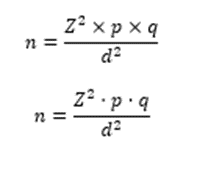
Where:
· Z=1.96corresponding to a 95% confidence level
· p=0.35 the proportion of prolonged hospital stay among AECOPD patients reported by Rooche et al[8].
· q=1-p=0.65
· d=0.10, the allowable error (absolute precision)
Substituting the values:
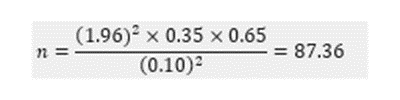
The calculated minimum sample size was approximately 90 patients. After accounting for a 10% contingency for incomplete data or dropouts, the final sample size was rounded to 100 patients.
Sampling Technique
A consecutive sampling method was used. All eligible patients admitted during the study period who satisfied the inclusion criteria were enrolled until the required sample size was achieved.
Data Collection Procedure
After obtaining written informed consent, detailed clinical data were collected using a structured proforma.
Baseline Variables
· Demographic details: age, gender
· Smoking history (pack-years)
· Duration and severity of COPD (based on GOLD classification)
· History of previous exacerbations and hospitalizations
· Presence of comorbidities (diabetes mellitus, hypertension, ischemic heart disease, etc.)
Clinical Parameters
· Vital signs at admission (respiratory rate, heart rate, blood pressure, oxygen saturation)
· Severity of dyspnea (Modified Medical Research Council scale)
· Use of accessory muscles and level of consciousness
Laboratory Investigations
· Complete blood count
· Serum electrolytes, renal function tests
· Arterial blood gas (ABG) analysis (pH, PaO₂, PaCO₂, HCO₃⁻)
· Inflammatory markers where available (e.g., CRP)
Radiological Assessment
· Chest radiograph findings (presence of consolidation, hyperinflation, or other abnormalities)
Outcome Variable
The primary outcome was duration of hospital stay, measured in days from admission to discharge.
· Prolonged hospital stay was defined as hospitalization exceeding 7 days, based on previous studies and clinical relevance.
Statistical Analysis
Data were entered into Microsoft Excel and analyzed using SPSS software (version 26).
· Continuous variables were expressed as mean ± standard deviation (SD) or median (IQR) as appropriate
· Categorical variables were expressed as frequencies and percentages
· Association between variables and prolonged hospital stay was assessed using:
· Chi-square test for categorical variables
· Independent t-test or Mann–Whitney U test for continuous variables
· Variables with p < 0.20 in univariate analysis were included in multivariate logistic regression to identify independent predictors
· A p-value < 0.05 was considered statistically significant
Ethical Considerations
· Approval was obtained from the Institutional Ethics Committee prior to initiation of the study
· Written informed consent was obtained from all participants
· Confidentiality of patient information was strictly maintained
· The study adhered to the principles of the Declaration of Helsinki
RESULTS:
Table 1: Baseline Demographic and Clinical Characteristics (n = 100)
|
Variable |
Frequency (n) |
Percentage (%) |
|
Age (years) |
||
|
40–50 |
18 |
18.0 |
|
51–60 |
32 |
32.0 |
|
61–70 |
34 |
34.0 |
|
>70 |
16 |
16.0 |
|
Gender |
||
|
Male |
72 |
72.0 |
|
Female |
28 |
28.0 |
|
Smoking Status |
||
|
Current smoker |
40 |
40.0 |
|
Former smoker |
32 |
32.0 |
|
Non-smoker |
28 |
28.0 |
|
Comorbidities |
||
|
Diabetes Mellitus |
38 |
38.0 |
|
Hypertension |
42 |
42.0 |
|
Ischemic Heart Disease |
24 |
24.0 |
Table 2: Clinical and Laboratory Profile of Patients
|
Variable |
Mean ± SD / n (%) |
|
Respiratory Rate (breaths/min) |
26.8 ± 4.2 |
|
Oxygen Saturation (%) |
88.6 ± 5.4 |
|
PaO₂ (mmHg) |
58.2 ± 8.6 |
|
PaCO₂ (mmHg) |
52.4 ± 9.1 |
|
pH |
7.32 ± 0.05 |
|
Hemoglobin (g/dL) |
11.4 ± 1.8 |
|
Total Leukocyte Count (cells/mm³) |
12,800 ± 3,200 |
|
Chest X-ray Findings |
|
|
Hyperinflation |
64 (64.0%) |
|
Consolidation |
28 (28.0%) |
|
Normal |
8 (8.0%) |
Table 3: Duration of Hospital Stay
|
Duration of Stay |
Frequency (n) |
Percentage (%) |
|
≤7 days |
58 |
58.0 |
|
>7 days (Prolonged stay) |
42 |
42.0 |
Mean duration of hospital stay: 7.8 ± 2.9 days
Table 4: Association Between Selected Variables and Prolonged Hospital Stay
|
Variable |
Prolonged Stay (n=42) |
Normal Stay (n=58) |
p-value |
|
Age >60 years |
30 (71.4%) |
20 (34.5%) |
<0.001* |
|
Current smokers |
26 (61.9%) |
20 (34.5%) |
0.006* |
|
Diabetes Mellitus |
24 (57.1%) |
14 (24.1%) |
0.001* |
|
PaO₂ <60 mmHg |
32 (76.2%) |
18 (31.0%) |
<0.001* |
|
PaCO₂ >50 mmHg |
28 (66.7%) |
16 (27.6%) |
<0.001* |
|
Consolidation on X-ray |
20 (47.6%) |
8 (13.8%) |
<0.001* |
*Statistically significant
Table 5: Multivariate Logistic Regression Analysis for Predictors of Prolonged Hospital Stay
|
Variable |
Adjusted Odds Ratio (AOR) |
95% CI |
p-value |
|
Age >60 years |
2.8 |
1.3 – 6.1 |
0.008* |
|
Diabetes Mellitus |
2.5 |
1.1 – 5.6 |
0.02* |
|
PaO₂ <60 mmHg |
3.6 |
1.6 – 8.0 |
0.001* |
|
PaCO₂ >50 mmHg |
2.9 |
1.3 – 6.5 |
0.007* |
|
Consolidation on X-ray |
3.2 |
1.4 – 7.4 |
0.004* |
*Statistically significant
DISCUSSION:
The present prospective observational study evaluated the clinical, laboratory, and radiological predictors of prolonged hospital stay among patients admitted with acute exacerbation of chronic obstructive pulmonary disease (AECOPD). In the current study, 42% of patients experienced prolonged hospitalization of more than 7 days. Similar findings were reported by Crisafulli et al., who observed that a substantial proportion of AECOPD patients required extended hospital stay due to severe respiratory compromise and associated comorbidities[7]. Prolonged hospitalization in COPD patients contributes significantly to healthcare burden and increases the risk of complications, emphasizing the importance of early risk stratification. In the present study, the majority of patients belonged to the age group above 60 years, and advanced age showed a significant association with prolonged hospital stay (p<0.001). Multivariate analysis further identified age >60 years as an independent predictor of prolonged hospitalization (AOR 2.8). These findings were comparable to the study by Roche et al., who reported that elderly COPD patients had poorer clinical outcomes and longer hospital stay because of reduced pulmonary reserve and multiple comorbid conditions[8]. Similarly, Almagro et al. demonstrated that advanced age was associated with increased mortality and prolonged recovery among hospitalized COPD patients[9].
Male predominance was observed in the current study, accounting for 72% of cases. This finding was consistent with previous Indian studies by Jindal et al. where COPD was more common among males due to higher smoking prevalence and occupational exposure to pollutants[10]. Smoking status also showed significant association with prolonged hospitalization in the present study. Current smokers had significantly higher rates of prolonged stay compared to non-smokers (p=0.006). Persistent smoking may aggravate airway inflammation, impair mucociliary clearance, and delay recovery during exacerbations. Among comorbid conditions, diabetes mellitus was significantly associated with prolonged hospital stay (p=0.001) and emerged as an independent predictor on multivariate analysis. Similar observations were reported by Mannino et al., who demonstrated that metabolic and cardiovascular comorbidities adversely influenced COPD outcomes and increased healthcare utilization[11]. The presence of diabetes may impair immune response and predispose patients to severe infections, thereby prolonging hospitalization.
Arterial blood gas abnormalities were important prognostic indicators in the present study. Patients with PaO₂ <60 mmHg and PaCO₂ >50 mmHg had significantly prolonged hospital stay, with hypoxemia emerging as the strongest independent predictor (AOR 3.6, p=0.001). These findings were in agreement with the study conducted by Gunen et al., who reported that hypoxemia and hypercapnia were associated with severe exacerbations and poor prognosis among hospitalized COPD patients[6]. Low oxygen tension reflects severe ventilation-perfusion mismatch and respiratory failure, which may necessitate intensive monitoring and prolonged treatment. Radiological consolidation on chest X-ray was significantly associated with prolonged hospital stay in the current study and independently predicted delayed discharge (AOR 3.2, p=0.004). Similar findings were reported by Roche et al., who observed that coexisting pneumonia and radiographic consolidation significantly worsened outcomes in AECOPD patients[8]. Consolidation may indicate infective exacerbation with greater inflammatory burden, resulting in increased treatment duration and slower recovery.
The mean duration of hospital stay in the present study was 7.8 ± 2.9 days, which was comparable to previous studies conducted in tertiary care settings. The overall findings suggest that older age, smoking, diabetes mellitus, hypoxemia, hypercapnia, and radiological consolidation are major determinants of prolonged hospitalization among AECOPD patients. Early identification of these risk factors at admission can help clinicians implement aggressive management strategies and optimize resource utilization.
Limitations:
· The study was conducted in a single tertiary care center, which may limit the generalizability of the findings to the broader population.
· The sample size was relatively small, and larger multicentric studies are required for better validation of results.
· Long-term outcomes such as readmission rates and mortality after discharge were not assessed.
· Pulmonary function parameters and certain inflammatory biomarkers were not evaluated in all patients due to resource limitations.
CONCLUSION:
This study highlights that a substantial proportion of patients with AECOPD experience prolonged hospitalization, emphasizing the need for early risk assessment. Advanced age, hypoxemia, hypercapnia, diabetes mellitus, and radiological evidence of consolidation were significantly associated with longer hospital stay, with hypoxemia and consolidation emerging as strong independent predictors. These findings underscore the importance of comprehensive clinical and laboratory evaluation at admission to identify high-risk patients. Incorporating these prognostic indicators into routine clinical practice may facilitate timely interventions, improve patient outcomes, and reduce healthcare burden by minimizing unnecessary prolongation of hospital stay.
REFERENCES:
1. Global Initiative for Chronic Obstructive Lung Disease - GOLD [Internet]. [cited 2026 May 25]. Global Initiative for Chronic Obstructive Lung Disease. Available from: https://goldcopd.org/
2. Wedzicha JA, Seemungal TA. COPD exacerbations: defining their cause and prevention [Internet]. [cited 2026 May 25]. Available from: https://www.thelancet.com/journals/lancet/article/PIIS0140-6736%2807%2961382-8/fulltext
3. Chronic obstructive pulmonary disease (COPD) [Internet]. [cited 2026 May 25]. Available from: https://www.who.int/news-room/fact-sheets/detail/chronic-obstructive-pulmonary-disease-(copd)
4. Ovid [Internet]. [cited 2026 May 25]. Global burden of COPD : Respirology. Available from: https://www.ovid.com/journals/respy/fulltext/10.1111/resp.12660~global-burden-of-copd doi:10.1111/resp.12660
5. Celli BR, Barnes PJ. Exacerbations of chronic obstructive pulmonary disease [Internet]. 2007 [cited 2026 May 25]. Available from: https://publications.ersnet.org/content/erj/29/6/1224
6. Gunen H, Hacievliyagil SS, Kosar F, Mutlu LC, Gulbas G, Pehlivan E, et al. Factors affecting survival of hospitalised patients with COPD [Internet]. 2005 [cited 2026 May 25]. Available from: https://publications.ersnet.org/content/erj/26/2/234
7. Crisafulli E, Ielpo A, Barbeta E, Ceccato A, Huerta A, Gabarrús A, et al. Clinical variables predicting the risk of a hospital stay for longer than 7 days in patients with severe acute exacerbations of chronic obstructive pulmonary disease: a prospective study. Respir Res. 2018;19:261. doi:10.1186/s12931-018-0951-4 PubMed PMID: 30591055; PubMed Central PMCID: PMC6307152.
8. Roche N, Zureik M, Soussan D, Neukirch F, Perrotin D, Investigators the UB (COPD ESC and. Predictors of outcomes in COPD exacerbation cases presenting to the emergency department [Internet]. 2008 [cited 2026 May 25]. Available from: https://publications.ersnet.org/content/erj/32/4/953
9. Almagro P, Calbo E, Ochoa de Echaguïen A, Barreiro B, Quintana S, Heredia JL, et al. Mortality After Hospitalization for COPD. Chest. 2002;121(5):1441–8. doi:10.1378/chest.121.5.1441
10. Sk J, An A, D G. A review of population studies from India to estimate national burden of chronic obstructive pulmonary disease and its association with smoking. PubMed [Internet]. [cited 2026 May 25]. Available from: https://pubmed.ncbi.nlm.nih.gov/11529432/
11. Mannino DM, Thorn D, Swensen A, Holguin F. Prevalence and outcomes of diabetes, hypertension and cardiovascular disease in COPD. Eur Respir J. 2008;32(4):962–9. doi:10.1183/09031936.00012408.